

From Office to Shop Floor: How Smart Manufacturing Reshapes Physical Manufacturing Productivity

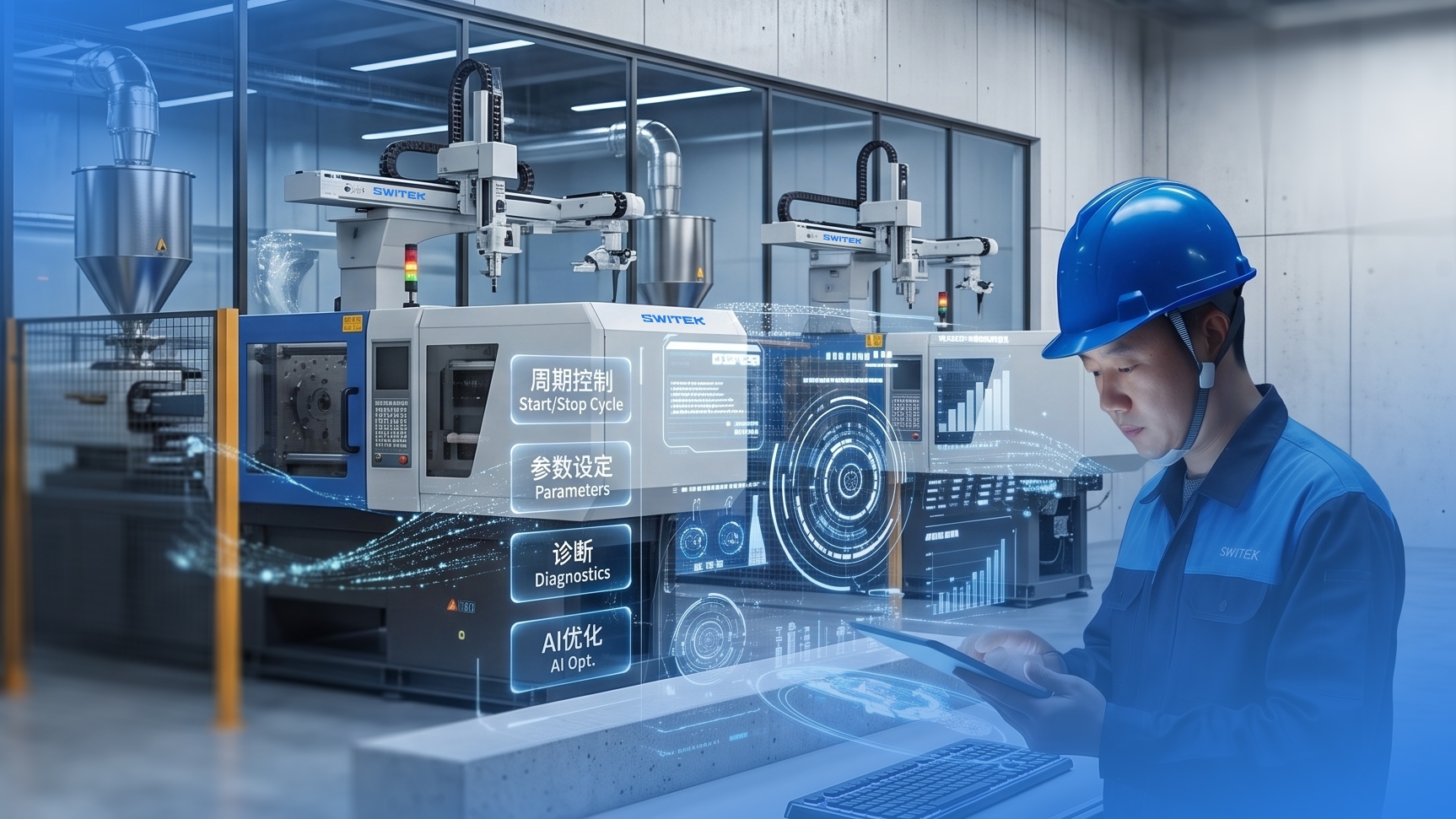
Since 2023, generative artificial intelligence represented by ChatGPT has sparked an efficiency revolution in office environments. However, behind the buzz surrounding "digital AI", an equally profound—and perhaps even more fundamental—transformation is quietly unfolding across manufacturing shop floors. If AI handles text, data, and decision-making, automation systems deal with physical products, precision machinery, and complex physical workflows. Grounded in the reality of manufacturing, this article explores the technological evolution of injection molding automation and In-Mold Labeling (IML) systems. It analyzes how Chinese automation solution providers represented by SWITEK enable manufacturing enterprises to transition from "single-machine speed acceleration" to "entire-line synergy" through line-wide coordination, precision execution, and deep integration. Drawing on global industrial robot installation data, injection molding machine market trends, and smart manufacturing technology adoption surveys, combined with technical case studies and economic benefit analyses, this paper demonstrates a core perspective: future smart manufacturing belongs to systems that can "think deeply and execute precisely"—a deep integration of AI and automation, rather than a choice between the two.
1. Introduction
1.1 Problem Statement
At the end of 2022, ChatGPT emerged and rapidly ignited a global discussion on how artificial intelligence is reshaping knowledge worker productivity. Writing a market analysis report, compiling thousands of sales data rows, or brainstorming a creative proposal—tasks that once required hours or days—can now be completed in minutes using AI tools. For a time, arguments about "white-collar workers being replaced by AI" swept the media, with widespread debate over how Large Language Models (LLMs) would rewrite office workflows.
However, on the main battlefield of the real economy—manufacturing plants—another transformation has been brewing for years. Unlike office tasks that handle words and numbers, factories deal with tangible products, heavy machinery, and rigorous manufacturing processes. A slide deck can be generated with a single AI prompt, but a plastic product—no matter how beautifully designed—must still undergo raw material drying, melt plasticization, mold filling, packing and cooling, mold opening and part extraction, in-mold labeling, vision inspection, automated stacking, and final packaging. A single misstep in any of these steps results in real scrap, material waste, and financial loss.
This brings us to a fundamental question: as AI optimizes decision-making processes at breathtaking speeds in the digital world, is the physical manufacturing process undergoing an equally profound transformation? Is there an intrinsic link between the two, or are they following entirely distinct evolutionary paths?
1.2 Research Background and Significance
Since the official introduction of the "Industry 4.0" concept at the Hannover Messe in Germany in 2011, the global manufacturing sector has been navigating a transformation wave characterized by digitization, networking, and intelligence. According to IoT Analytics data, public search interest in Industry 4.0 grew 140-fold over a decade, with academic publications exceeding 50,000 in 2021 alone, and annual startup funding in this sector surging by 319% from 2011 to 2021 [1]. Behind these numbers lies the manufacturing industry's deep yearning for technological innovation.
In China, the pressure to upgrade manufacturing is particularly pressing. On one hand, demographic shifts are accelerating labor cost increases—National Bureau of Statistics data shows that China's manufacturing employment peaked in 2012 and has declined continuously since, while the working-age population (ages 15–59) as a proportion of the total population fell from 69.8% in 2011 to 61.3% in 2023. On the other hand, global supply chain restructuring, rising trade barriers, and heightened customer expectations for product quality and delivery cycles are compelling manufacturers to uncover new competitive advantages.
In this context, the injection molding industry, as a foundational sector of Chinese manufacturing, is at a critical window of transition from traditional labor-intensive operations to automated and intelligent manufacturing. According to Intelligence Research Group data, China's injection molding machine market size expanded from RMB 21.16 billion in 2016 to approximately RMB 27.06 billion in 2023, representing around 32% of the global market [2]. However, technical bottlenecks remain evident in high-end markets: in the first half of 2024, China's average export price per injection molding machine stood at USD 40,900, while the average import price was USD 77,200, indicating substantial room for catch-up in high-end product segments.
1.3 Article Structure and Objectives
This article systematically presents the profound shifts taking place in injection molding automation across three dimensions: technological evolution, market trends, and practical case studies. Chapter 2 analyzes the technical architecture and core logic of smart manufacturing, focusing on why "entire-line synergy" takes precedence over "single-machine speed acceleration". Chapter 3 introduces the key technical systems of In-Mold Labeling (IML) and injection molding automation, including robotic extraction, vision inspection, and automated cartoning. Chapter 4 examines SWITEK as a representative case study, exploring how a Chinese automation solution provider assists manufacturers in building high-efficiency production systems. Chapter 5 relies on market data to present the economic returns and growth prospects of injection molding automation. Chapter 6 conducts an in-depth discussion on the relationship between AI and automation, highlighting their distinct roles and integration pathways in manufacturing. The final chapter summarizes the paper and looks toward future trends.
2. Core Logic of Smart Manufacturing: Synergy from "Brain" to "Hands"
2.1 AI Boundaries and the Irreplaceability of Automation
To understand the respective roles of AI and automation in manufacturing, one must first clearly recognize their fundamental differences. AI—especially mainstream Large Language Models and deep learning systems—is essentially an information processing system. It excels at discovering patterns, making predictions, and generating content from massive datasets. In McKinsey's terms, AI acts as the manufacturing "brain": it optimizes scheduling, predicts equipment failures, analyzes quality data, and recommends process parameter adjustments.
However, translating the "brain's" decisions into physical output depends entirely on the "hands"—the automation systems. When AI determines the optimal mold temperature parameters, high-precision servo control systems are required to execute them; when AI detects quality variance during an injection cycle, robotic pickers and sorting systems must automatically eject defective parts; when AI advises adjusting production tactics to handle order fluctuation, every piece of equipment across the line must respond in sync.
This brings to light an easily overlooked reality: the boundary of AI capability marks the exact starting point of automation. AI can deliver quality predictions in milliseconds, but if automation execution responds with second-level delays, rapid prediction loses practical value. Similarly, AI can formulate a flawless process optimization plan, but if factory machinery cannot maintain precise process parameter controls, the plan remains paper theory.
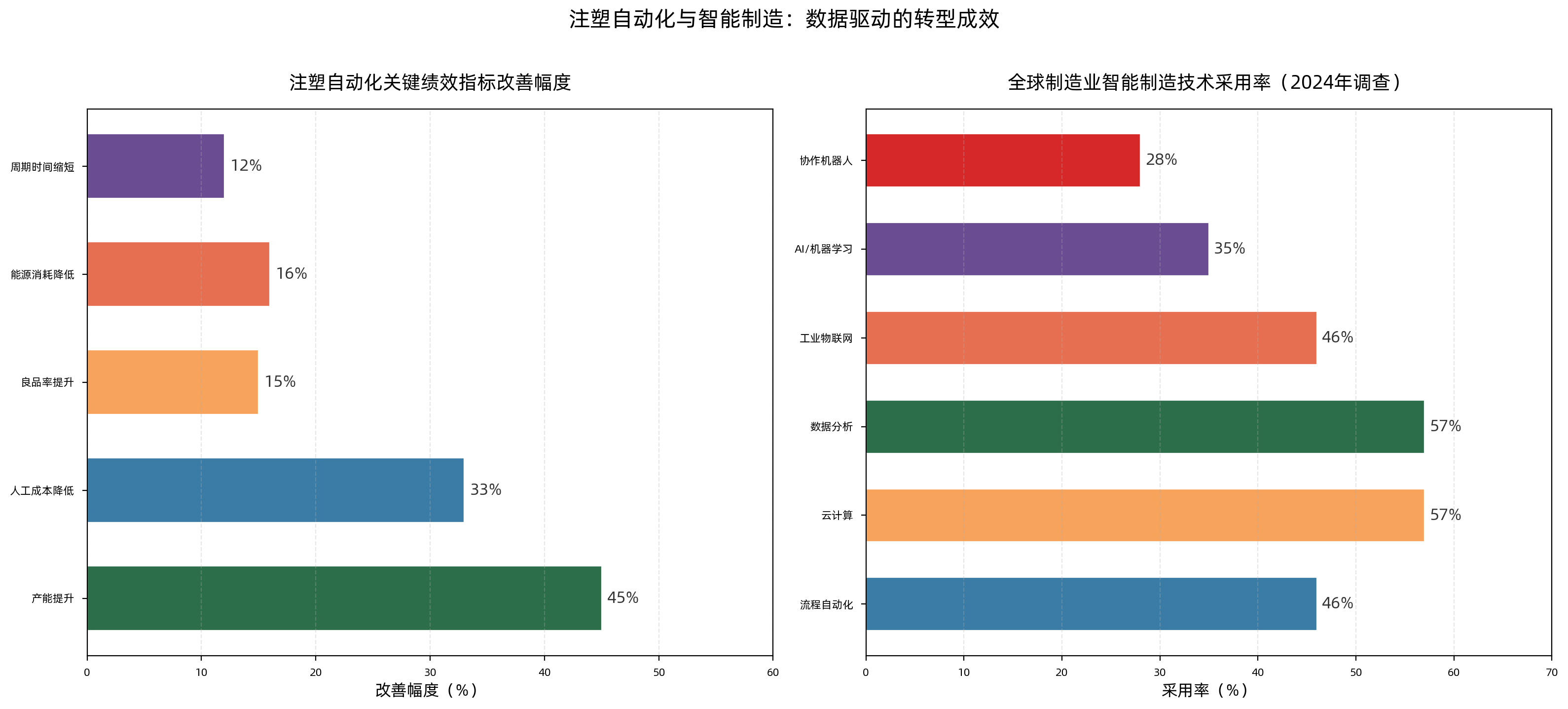
Deloitte's 2025 Smart Manufacturing Survey corroborates this view: 92% of manufacturers consider smart manufacturing a primary driver of competitiveness over the next three years. However, rising smart manufacturing maturity relies on multiple technology pillars simultaneously—with 46% ranking process automation among their top two investment priorities, 57% leveraging cloud computing, 57% using data analytics, and 46% adopting Industrial IoT [3]. Clearly, enterprises with stronger automation foundations are better positioned to extract value from AI.
2.2 Mindset Revolution: The Shift to "Entire-Line Synergy"
For a long time, many manufacturing enterprises approached automation upgrades by focusing on individual machinery units. A faster injection molding machine, a higher-precision robot arm, or a more sensitive inspection setup—while such "point-wise" improvements deliver immediate localized gains, they frequently overlook full production system synergy.
The "entire-line synergy" mindset operates on a completely different paradigm. Instead of making one machine run faster, it focuses on making the entire line run smoother and more efficiently. By analogy, the speed of a convoy is determined not by its fastest vehicle, but by its slowest. In an injection molding line, even if mold cycle time drops below 10 seconds, if robotic part retrieval takes 12 seconds or vision inspection takes 15 seconds, actual line throughput will be bottlenecked by the slowest process step.
From an academic standpoint, Digital Twin technology offers a powerful tool for solving entire-line synergy challenges. Wang Zhiyong et al. (2021) proposed an Industrial Internet architecture tailored for injection molding, establishing a five-layer progressive system spanning "smart equipment integration, smart line, smart workshop, smart factory, to smart business ecosystem," along with implementation methods for smart factories based on Digital Twins [4]. This research validates the feasibility of full-line integration for intelligent transformation in injection molding. Put simply, only when injection molding machines, robots, IML systems, inspection units, and packaging equipment operate within a unified control and management framework can manufacturing advance from "equipment automation" to "system intelligence".
2.3 Dual Acceleration of Information and Physical Flows
Under the "entire-line synergy" framework, smart manufacturing is essentially an optimization of "flows"—information flow and physical flow.
Information flow refers to data transmission and processing within the production ecosystem. Once an injection molding machine finishes an injection cycle, cavity pressure sensors acquire real-time data transmitted via Industrial IoT to the MES (Manufacturing Execution System) or cloud platforms. Analyzed by AI models, the system determines product quality compliance and relays results to downstream machinery. The speed and accuracy of this information flow dictate whether a line can achieve true adaptive control.
Physical flow concerns the movement of materials, parts, and tools through space. From raw resin entering the injection hopper, to molten plastic filling the mold, to part extraction via robots, and onward through inspection, stacking, cartoning, and palletizing—every step is a physical motion requiring precise mechanical control. Information flow guides and optimizes physical flow, but ultimate execution rests on the physical flow itself.
El Ghadoui et al. (2023) demonstrated a classic instance of information flow optimizing physical flow: they developed a hybrid optimization method combining backpropagation neural networks with genetic algorithms to globally optimize injection molding process parameters. Results indicated that while ensuring product quality, raw material consumption dropped by 2%, cycle times shortened by 12%, and energy usage decreased by 16% [5]. That 12% cycle reduction and 16% energy savings directly demonstrate information flow feeding back into physical flow enhancement.
Similarly, in the PVC elbow automated production system designed by SWITEK for China LESSO Group, comprehensive line-wide automation integration allowed the customer to cut labor costs by approximately one-third while boosting overall productivity by 45% [6]. This 45% productivity gain was not the result of upgrading a single machine, but the outcome of whole-line synergistic operation powered by dual optimization of information and physical flows.
3. Key Technology Framework for Injection Molding Automation
3.1 Automated Part Extraction: From Robotic Arms to Intelligent Gripping
Automated part extraction is the most fundamental yet critical phase of injection molding automation. Upon every mold opening, the robot must extract molded parts with high precision within a tight timeframe and transfer them to downstream operations. This seemingly simple movement places stringent demands on robot speed, accuracy, reliability, and flexibility.
From a technological standpoint, injection molding robots have evolved through three main stages. The first stage involved basic pneumatic pickers executing fixed motions with minimal flexibility. The second brought servo-driven robots, utilizing servo motors across axes to execute complex trajectory planning and achieve higher positioning accuracy. The third stage features intelligent robots integrated with vision guidance, force sensing, and adaptive control algorithms capable of handling part changeovers and operational fluctuations.
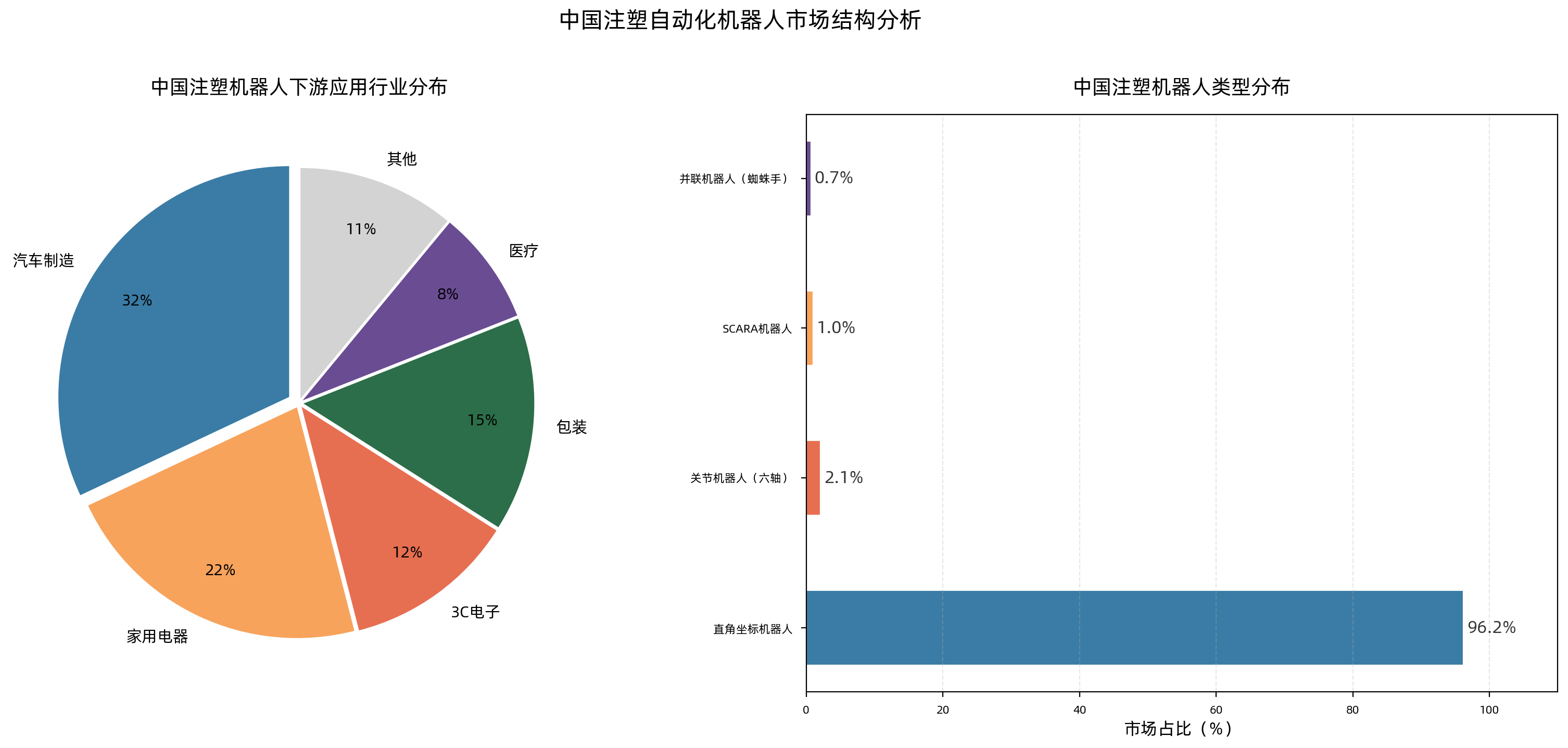
According to China Injection Molding Robotics Insight Report data, total sales of linear Cartesian robots for injection molding in China reached 92,169 units in 2024, commanding a 96.2% share of the injection molding robot market [7]. This figure underlines the dominant position Cartesian robots hold in injection molding automation. The key reason is that the functional requirements of injection part extraction—vertical motion, kick-out motion, and transverse movement—align perfectly with Cartesian kinematic traits. Compared to 6-axis articulated arm robots, Cartesian systems offer lower cost, simpler control setups, and higher structural rigidity for injection extraction scenarios.
Taking SWITEK's SW6710D-20 3-axis servo injection molding robot as an example, its technical specifications illustrate contemporary performance levels: compatible with 100 to 350-ton injection molding machines, payload capacity of 8 kg, dry cycle time of just 7 seconds, transverse stroke (Z-axis) of 1750 mm, vertical stroke (Y-axis) of 1000 mm, and kick-out stroke (X-axis) of 1025 mm. All axes are driven by servo motors—X-axis at 400W, Y-axis at 750W, and Z-axis at 750W [8]. This 3-axis servo configuration empowers rapid, high-precision motion control across 3D space, satisfying high-speed extraction requirements for molded parts of various dimensions.
3.2 In-Mold Labeling (IML): Merging Decoration and Molding into One
In-Mold Labeling (IML) stands as a landmark technique in injection molding automation, consolidating label decoration and plastic molding—two traditionally separate operations—into a single production cycle. Pioneered in the European dairy packaging sector, IML rapidly expanded across food, beverage, personal care, medical, and automotive industries, establishing itself as a premier process for high-end plastic packaging.
The operational mechanism of IML can be summarized in three steps. First, the label is retrieved from a magazine by a robotic arm and placed securely onto designated interior mold cavity walls using electrostatic charge or vacuum suction. Second, molten plastic is injected into the mold cavity, flowing under high temperature and pressure to fuse directly with the heat-sensitive adhesive layer on the back of the label. Third, following cooling and mold opening, the label and plastic part emerge as a seamlessly integrated unit.
The benefits of this process are multidimensional. Quality-wise, the bond strength between the IML label and plastic substrate is exceptionally high, eliminating common post-labeling flaws like bubbling, peeling, or edge curling, while boosting sidewall strength by roughly 20% [9]. Efficiency-wise, embedding labeling into the molding cycle bypasses post-decoration steps, significantly shortening production workflows. Environmentally, IML products require no label-substrate separation during recycling (as materials are identical or compatible), streamlining scrap processing. Security-wise, IML labels present vastly higher anti-counterfeiting barriers than pressure-sensitive labels.
However, IML imposes rigorous demands on machinery and process control. Label thickness is typically kept within 15 to 40 microns [10], requiring dimensional stability despite extreme thinness. In-mold label positioning must achieve micron-level precision to avoid offset or skew defects. Furthermore, the label material's thermal expansion coefficient must match the plastic substrate to prevent internal stress warping during cooling. These technical hurdles make IML system capability a benchmark for evaluating an automation provider's technical prowess.
As one of the earliest IML system suppliers in China, SWITEK brings over 13 years of practical IML implementation experience, with product lines covering both top-entry and side-entry system architectures. Top-entry IML configurations suit facilities with sufficient ceiling height and cycle times exceeding 8 seconds, utilizing separate robot and EOAT controls with choices of 3-axis high-speed or heavy-duty robots. Side-entry IML systems serve space-constrained applications or demands for extreme cycle speeds [11]. In field applications, SWITEK's IML solutions cover products ranging from yogurt lid packaging (cycles under 2.3 seconds) to 20L–33L paint pails, exporting to 43 countries and regions while serving leading global dairy brands [12].
3.3 Vision Inspection: Quality Gatekeeper in the AI Era
Within injection molding automation systems, vision inspection serves as the core gatekeeper of product quality. Following molding and extraction, every item must pass rigorous quality checks before moving to packaging. Traditional manual inspection suffers from low efficiency (operators maintain high focus for only 15–20 minutes) and inconsistent evaluation criteria across shifts and individual workers.
Machine vision technology fundamentally transforms this dynamic. Utilizing high-resolution industrial cameras, precision optics, and image processing algorithms, vision systems scan dozens of parts per second. They inspect dimensional tolerances, surface blemishes, color variances, short shots, flash, and sink marks with objective consistency. Crucially, vision systems integrate with sorting mechanisms to automatically reject defective items, physically blocking sub-standard parts from reaching downstream steps.
In recent years, deep learning integration has propelled machine vision inspection performance to new heights. Traditional machine vision relied on hand-crafted feature extraction algorithms, struggling with complex surface textures, specular reflections, or subtle scratches. Deep learning models autonomously learn defect characteristics from annotated sample datasets, outperforming traditional rule-based methods in detection accuracy and robustness. For instance, Kim et al. (2022) developed a real-time inspection system combining moiré fringe patterns and the YOLOv7 deep learning model, applying it successfully to online quality inspection of highly reflective molded parts, confirming deep learning's industrial viability [13].
In SWITEK's downstream injection molding automation solutions, vision inspection operates as a flexible, modular option. In plastic cap molding automation setups, the line integrates high-speed robotic extraction, conveyor lines, vision inspection modules, and automated counting/cartoning units. Vision modules scan each cap in motion along conveyor lines, flagging and auto-sorting non-compliant parts instantly [14]. Inspection transforms from an isolated, time-consuming bottleneck into a seamless element of continuous production rhythm.
3.4 Automated Stacking and Cartoning: The Final Mile of Downstream Automation
If injection molding machines form the heart of a production line, robots the arms, and vision systems the eyes, then automated stacking and cartoning systems represent the "final mile" connecting production output to warehouse storage.
The engineering complexity of this stage is often underestimated. Automated stacking and cartoning must navigate diverse part geometries (round, square, irregular, thin-wall, deep-cavity), varied stacking patterns (interlocking, parallel, nested), diverse packaging materials (corrugated boxes, trays, plastic totes), and client-specific pack counts or arrangements. A robust system must accommodate these variables smoothly while maintaining high-speed operational stability.
In SWITEK's solution portfolio, automated stacking and packing form an integral part of downstream automation. Taking cutlery packaging automation as an example, the system aligns molded utensils by orientation and quantity, executes accurate automated batch counting, and utilizes pick-and-place arms to stack and pack items into shipping cartons according to predefined layout patterns. The process operates fully automatically, requiring manual intervention only for transporting filled cartons and loading empty boxes.
From an economic standpoint, downstream automation delivers clear value. First, automated stacking and cartoning eliminate highly repetitive, physically demanding tasks, reducing reliance on direct line labor. Second, automated stack neatness and consistency far exceed manual packing, lowering transit damage rates while maximizing storage space utilization. Third, automated batch counting eliminates human counting errors, enhancing shipping accuracy.
Crucially, downstream automation realization embodies the complete "entire-line synergy" philosophy. Only when extraction, inspection, stacking, and cartoning operate in interconnected harmony can an injection molding line realize true "unmanned" or "lights-out" production goals—the core aspiration of smart manufacturing.
4. SWITEK: Evolving from Equipment Vendor to Systems Partner
4.1 Corporate Development and Positioning
Guangdong Switek Technology Co., Ltd. (SWITEK) epitomizes the automation journey of Chinese manufacturing. Founded in 2006, SWITEK started by manufacturing auxiliary equipment and basic pick-and-place robots for injection molding machines. Over nearly two decades of growth, SWITEK has expanded into an NEEQ-listed enterprise (Stock Code: 838363) with RMB 30 million in registered capital and over 120 employees, broadening its business scope from standalone robots to full In-Mold Labeling (IML) systems and comprehensive downstream injection molding automation solutions.
Key corporate milestones highlight this expansion path. In 2013, SWITEK achieved National High-Tech Enterprise certification, earning official recognition for its R&D and engineering capabilities. In 2015, SWITEK partnered with China LESSO Group to engineer an automated production line for PVC pipe elbows, establishing a landmark automation reference in pipe fitting molding. On August 9, 2016, SWITEK listed on the NEEQ stock board, tapping capital markets for growth. By 2017, the firm entered automotive and 3C automation system development while initiating Industrial Internet platform construction. SWITEK holds multiple recognitions, including Guangdong Specialized and Sophisticated "Little Giant" Enterprise, Dongguan Industrial Robotics and Automation Engineering Center, and Dongguan Top 100 Innovative Enterprise designations [15].
Product-wise, SWITEK has built a comprehensive technical portfolio: the linear robot line includes 3-axis servo, 5-axis servo, and custom robotic options; the IML system lineup spans top-entry and side-entry configurations for applications from food packaging to heavy industrial pails; system integration services deliver turnkey lines tailored to client needs, encompassing extraction, vision inspection, IML, stacking, and packing. SWITEK also supplies auxiliary equipment (central feeding systems, mold temperature controllers, granulators, chillers) and provides OEM/ODM manufacturing services.
Organizationally, SWITEK maintains a dedicated 45-person engineering team focused exclusively on designing, commissioning, and optimizing custom injection automation projects [16]. This team serves as the backbone supporting SWITEK's transition from standard equipment supplier to full turnkey systems integrator. Operating out of a 10,000 m² facility, SWITEK has delivered over 20,000 robotic systems worldwide through 2024, serving clients in over 60 countries and regions [6].
4.2 Core Product Portfolio and Technical Strengths
In the IML domain, SWITEK's competitive strength rests on three main pillars.
First is system integration mastery. An IML system cannot operate in isolation; it demands seamless synchronization between injection machines, molds, robots, vision units, and cartoning equipment. SWITEK's engineering staff designs complete, end-to-end automation lines customized to product geometries, cycle requirements, and plant layouts. For high-speed yogurt lid IML applications, the system executes label retrieval, placement, in-mold labeling, part extraction, and conveyor transfer within an aggressive cycle time under 2.3 seconds [12]. Maintaining reliability under such extreme speeds demonstrates SWITEK's technical expertise.
Second is standardized product diversity. SWITEK's IML robot series spans small to large clamp-tonnage injection machines. The SW6308S-20 IML model, for example, pairs with 50 to 250-ton injection molding machines, supporting a 3 kg payload with a 6-second dry cycle time and strokes of 1280 mm (Z-axis), 800 mm (Y-axis), and 820 mm (X-axis) [17]. These specifications fulfill most medium-tonnage IML production requirements. For larger clamp tonnages and heavier end-of-arm tooling, SWITEK provides heavy-duty robot models.
Third is global service capability. SWITEK products are exported to 43 countries and regions, with key international markets in India, Russia, Southeast Asia, and the Middle East. SWITEK offers full lifecycle support ranging from online technical support and on-site commissioning to operator training and maintenance. In overseas markets, SWITEK supplies both physical machinery and complete automation design expertise.
4.3 Insights from Industry Case Studies
The implementation case with China LESSO Group illustrates SWITEK's system-level value. As one of China's largest plastic pipe and fitting manufacturers, LESSO faced long-standing efficiency bottlenecks in molding PVC elbows. PVC elbow molding presents unique challenges due to complex part geometry, precise mold actions, and high production volume demands. Prior to adopting SWITEK's automation line, several production stages relied on manual labor, leading to inconsistent output and variable quality.
SWITEK engineered an end-to-end downstream solution for LESSO encompassing automatic part removal, automatic degating, vision quality inspection, stacking, and box packing. Performance data post-commissioning revealed a reduction in labor costs of roughly one-third, alongside a 45% boost in overall productivity [6]. A 45% productivity gain meant that using identical capital assets, floor space, and energy inputs, total output nearly increased by half.
This case highlights a broader industry lesson: in plastic molding operations, downstream automation often yields higher return on investment than primary equipment upgrades (such as replacing injection molding machines). Machine speed improvements are typically incremental—reducing a cycle from 12 to 10 seconds delivers a 16.7% improvement. However, eliminating downstream bottlenecks caused by manual picking, inspection, and packing can boost entire line output by 30% or more.
5. Industry Trends Reflected in Market Data
5.1 Rising Global Industrial Robot Deployments
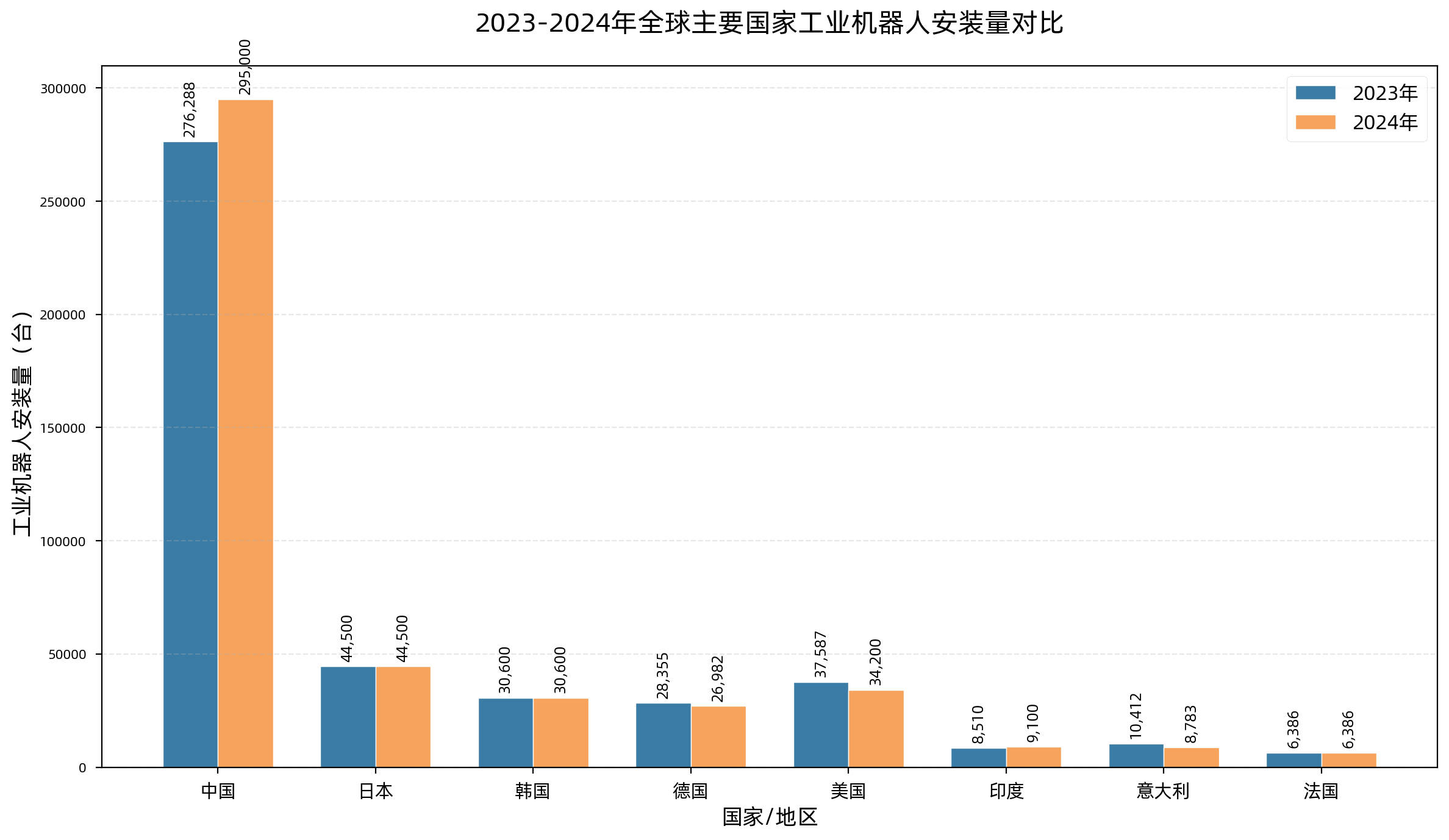
According to the International Federation of Robotics (IFR) World Robotics 2024 Report, annual global industrial robot installations reached 541,302 units in 2023—the second-highest historical level on record. Installations reached 542,000 units in 2024, maintaining annual installations above half a million units for four consecutive years. The operational stock of global industrial robots reached 4,463,000 units, representing nearly a three-fold increase over the past decade [18].
China's role in this global landscape is significant. In 2024, China installed 295,000 industrial robots, representing 54% of the global total, holding the top rank worldwide and outpacing installations across all other global regions combined. China's operational industrial robot stock surpassed 2 million units in 2024, accounting for 45.4% of the world total [19]. These metrics demonstrate that China's manufacturing automation momentum continues to accelerate, making China the largest growth engine for automation demand globally.
Importantly, the sectoral breakdown of industrial robot adoption is broadening. Historically, automotive and electronics manufacturers were the primary adopters, accounting for nearly half of global installations. However, 2024 data shows that electronics absorbed 24% and automotive 23% of global robot installations, with the remaining 53% expanding into general industrial sectors like metal processing, plastics/chemicals, food & beverage, and pharmaceuticals [19]. This shift confirms that automation is moving beyond automotive OEMs into broader manufacturing applications, with plastic injection molding serving as a prime beneficiary.
5.2 Structural Growth in the Injection Molding Machine Market
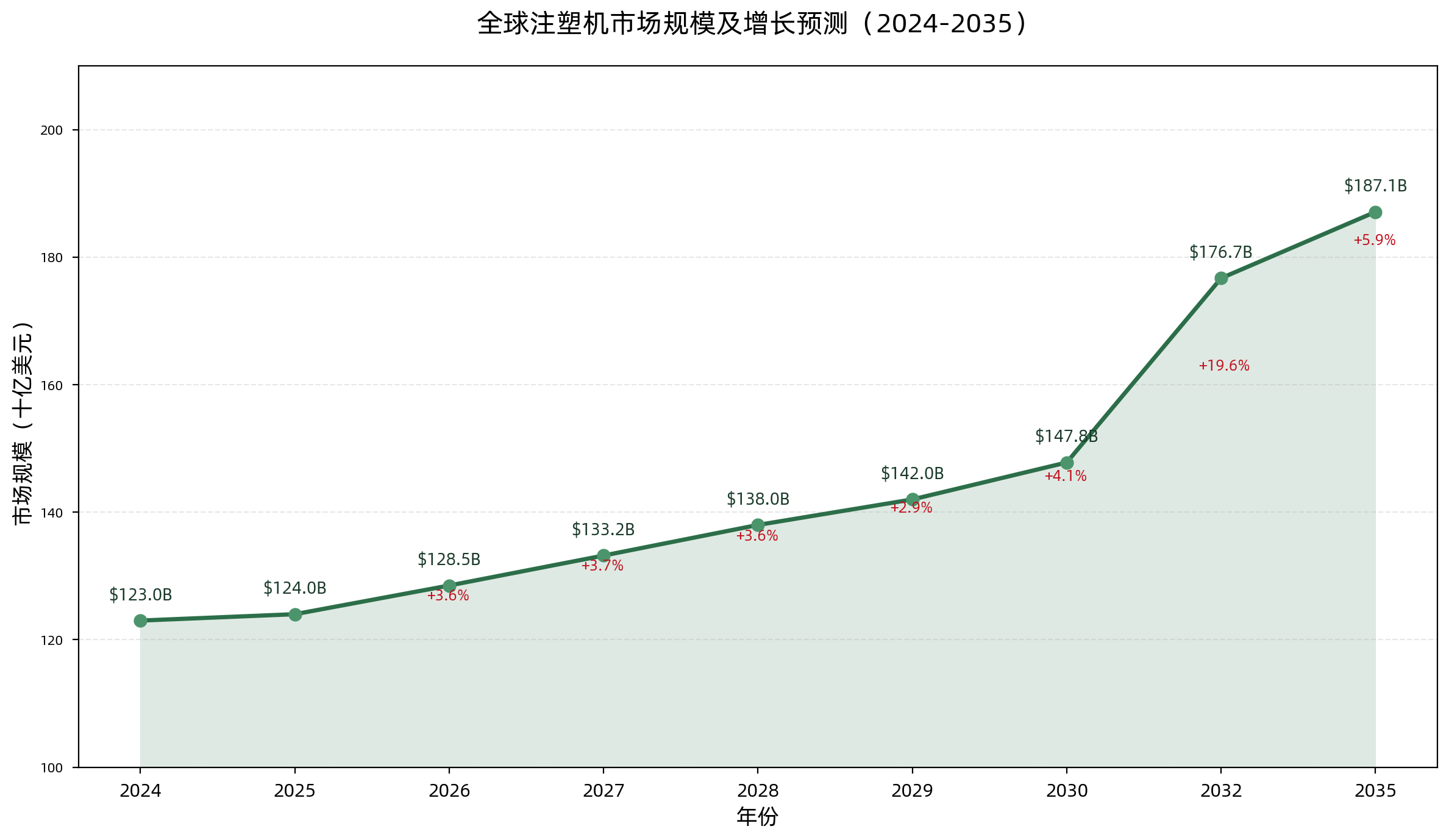
The global plastic injection molding machine market continues on a steady growth trajectory. Credence Research values the global market size at USD 12.303 billion in 2024, projecting expansion to USD 17.671 billion by 2032, representing a compound annual growth rate (CAGR) of 4.63% [20]. Regionally, Asia-Pacific dominates with approximately 45% market share, led by China, Japan, and India. North America and Europe hold 25% and 20% shares, respectively.
By machine technology, all-electric injection molding machines show the strongest growth momentum. All-electric models offer higher energy efficiency, faster response times, and superior repeatability, steadily replacing traditional hydraulic machines in precision molding applications. Research Nester projects all-electric market share to surpass 51.9% [21]. This shift reflects market demands for higher machinery precision and speed—automation systems require tight machine response synchronization, giving all-electric models a natural technological advantage.
By end-use application, automotive remains the largest market segment for injection molding equipment at 30%, closely followed by packaging at nearly 25% [20]. Driven by automotive lightweighting, electric vehicle growth, medical disposables, and consumer electronics, the demand structure for injection molding equipment continues to mature. Demand for high-speed, high-precision equipment drives concurrent market expansion for auxiliary automation equipment, including robotic extractors, IML systems, and vision inspection units.
5.3 Smart Manufacturing Adoption and Enterprise Intentions
Deloitte's 2025 Smart Manufacturing Survey provides insights into real-world factory adoption trends. The survey indicates that 92% of manufacturers regard smart manufacturing as a primary driver of competitiveness over the next three years. This high consensus demonstrates that smart manufacturing has shifted from an optional enhancement to a core strategic necessity for operational longevity.
Regarding technology adoption, Cloud Computing (57%) and Data Analytics (57%) lead current deployment rates, closely followed by Process Automation (46%) and Industrial IoT (46%) [3]. Notably, with Process Automation and IIoT both at 46% adoption, nearly half of surveyed manufacturers have implemented physical automation in daily operations. For non-adopting enterprises, automation decisions have shifted from "if" to "when".
The survey also highlights that increasing smart manufacturing maturity yields a 10% to 20% increase in production capacity and a 7% to 20% improvement in workforce efficiency [3]. Translated to financial performance, a facility producing RMB 10 million annually could scale output to RMB 11–12 million following smart manufacturing upgrades. For margin-sensitive, labor-intensive custom molding operations, this performance bump can transform operating profitability.
However, deployment challenges remain. Human capital ranks as the area with the lowest current smart manufacturing maturity but the highest intention for improvement, with 68% of companies actively recruiting new digital talent [3], identifying talent scarcity as a key adoption bottleneck. Consequently, turnkey solution integrators like SWITEK—who handle installation, commissioning, and staff training—are increasingly vital partners for manufacturers.
5.4 Economic Evaluation: Realistic ROI Analysis for Automation Investments
When small and medium-sized manufacturers consider automation capital investments, payback period is often their primary consideration. Initial capital outlays for full injection molding automation systems—comprising robots, IML rigs, vision inspection, and cartoning units—range from hundreds of thousands to millions of RMB, representing a substantial investment for contract molders operating on sub-10% profit margins.
Field data indicates that payback periods for injection molding automation typically fall between 12 and 18 months, with high-volume applications achieving payback within 6 to 8 months. McKinsey's Outlook on China Smart Manufacturing and Automation highlights that manufacturers should prioritize high-value operational pain points to target ROI payback horizons within 12 to 18 months [22].
ROI evaluation should account for multiple factors. First, direct labor replacement. Operating one injection machine on a 24/7 3-shift rotation traditionally requires 3 to 4 operators, totaling RMB 200,000–300,000 annually in labor expense per machine position. With automated cell integration, a single operator can oversee 3 to 5 automated machines, cutting direct labor costs by two-thirds or more.
Second, scrap reduction through quality stabilization. Manual part handling introduces scratch marks, drops, and contamination defects. Automation minimizes these handling defects. Kistler case study data demonstrated that installing process monitoring systems helped a molding plant cut customer return rates from over 10,000 PPM down to 98 PPM, and ultimately to 1 PPM [23]. In high-volume manufacturing, raw material savings from reduced scrap rates represent significant cost avoidances.
Third, revenue gains from capacity expansion. As noted previously, whole-line automation can expand effective cell output by over 30%. For plants operating near capacity limits, automation-driven throughput gains allow taking on additional customer order volume without expanding physical floor footprint or buying primary molding machines. This incremental revenue stream often represents the largest financial return component.
6. Discussion: The True Relationship Between AI and Automation
6.1 A Misunderstood "Rivalry"
In contemporary media, AI and automation are often framed as competing or mutually exclusive technologies. Some critics dismiss AI as overhyped software incapable of solving shop floor physics, while others view physical automation as legacy hardware, positioning AI as the sole future of manufacturing. Both views overlook operational realities.
AI and automation do not compete; they serve as complementary technical layers addressing different challenges. Within manufacturing, AI excels at managing "uncertainty"—determining optimal process parameters under fluctuating material batches, predicting equipment wear before failure, or adjusting scheduling to accommodate dynamic order streams. These non-linear, multi-variable problems suit machine learning and deep learning algorithms.
Conversely, physical automation excels at handling "determinism"—executing motion controls reliably once parameters are set, rejecting defective parts consistently upon identification, and stacking or packing parts repeatedly at high speeds. These tasks require precise, repeatable mechanical execution—the core strength of automation systems.
Pitting AI against physical automation stems from a fundamental misunderstanding of manufacturing operations. Every production step combines elements of uncertainty and determinism. An effective smart manufacturing architecture relies on AI to navigate operational uncertainty and guide decisions, while depending on physical automation to execute those decisions with mechanical precision.
6.2 Integration Pathways and Implementation Challenges
The convergence of AI and physical automation is transitioning from theoretical concepts to shop floor implementations. Promising integration pathways include:
First, AI-enhanced machine vision inspection. Traditional vision systems rely on rule-based edge algorithms that struggle with complex surface defects. Integrating deep learning architectures (e.g., CNNs, YOLO object detection) enables systems to learn subtle defect signatures autonomously, lifting inspection accuracy from 80%–90% up to 99%+ [24]. Deep learning vision systems also refine model weights incrementally over time to adapt to new part variations.
Second, AI-driven predictive maintenance. Unplanned downtime poses a major operational risk—a single machine failure can stall an entire line for hours. By processing continuous sensor telemetry (vibration, thermal, current, pressure), AI models monitor machine health, forecast component wear, and schedule maintenance during planned downtime windows, reducing emergency repairs and lowering maintenance costs.
Third, AI-optimized molding parameters. Injection molding is a complex, coupled process where dozens of variables (melt temperature, injection speed, pressure profiles, hold times, cooling durations) interact simultaneously. Parameter setup traditionally depended heavily on technician experience. AI models analyze historical production data to map relationships between process settings and product quality, automatically recommending optimized configurations. Research by El Ghadoui et al. (2023) demonstrated that AI parameter optimization achieved a 12% reduction in cycle times and a 16% decrease in energy consumption while maintaining part quality [5].
Despite these advancements, practical implementation challenges remain. Data foundations pose a primary hurdle: training robust AI models requires clean, structured historical data, which many factories have yet to capture systematically. Talent scarcity presents another barrier: domain experts combining AI skills with polymer processing expertise remain rare. Finally, organizational inertia persists: many plant managers still prefer intuition over data-driven guidance. Microsoft's Manufacturing Report highlights the "10-20-70 Rule": smart manufacturing project success relies 10% on algorithms, 20% on technology infrastructure, and 70% on organizational and process change management [25]. Technology deployment is merely the entry step; real value realization depends on transforming human workflows and operational mindsets.
6.3 From "Digital AI" to "Physical AI": A Mindset Shift
Comparing software platforms like ChatGPT with physical automation systems like SWITEK helps clarify this operational transformation.
ChatGPT represents "Digital AI"—processing text symbols, structured data, and logical inference to boost knowledge worker productivity. SWITEK represents "Physical Automation"—handling tangible products, robotic motions, and thermal processes to elevate factory throughput. While operating in separate domains, they converge toward a common operational goal.
"Digital AI" optimizes information efficiency—accelerating data retrieval, text generation, and analytical tasks. "Physical Automation" optimizes physical efficiency—reducing time, material, and labor required to manufacture, inspect, and handle products. Industrial economies depend on both information and physical efficiency. Without information efficiency, physical manufacturing lacks direction; without physical execution, analytical optimization remains theoretical.
Future manufacturing development will be defined by the convergence of these two domains. AI algorithms will embed directly into physical automation setups—governing vision inspection, predictive maintenance, and adaptive process loops. Concurrently, physical automation will serve as the physical execution layer for AI insights, translating digital optimizations into physical products.
This convergence reshapes manufacturing competitiveness. Historical competitive advantages stemmed from standalone machine speed or single tooling designs. Future advantages will depend on system-wide coordination—the integration depth between AI decision models and physical automation hardware, the synchronization of information and physical flows, and the line's adaptability to shifting market demands. True smart manufacturing focuses not on making one machine run faster, but on building an interconnected, resilient, and adaptive production ecosystem.
7. Future Outlook
7.1 Three Development Vectors
Looking ahead over the next 5 to 10 years, injection molding automation development will advance along three primary vectors.
Vector 1: "Higher Precision and Speed". As precision demands intensify across consumer electronics, medical devices, and automotive components, performance expectations for automation speed and accuracy will continue to rise. High-speed linear robots (dry cycles under 4 seconds), ultra-fast IML systems (cycles under 2 seconds), and high-throughput vision modules (inspecting hundreds of parts per minute) will become standard production requirements.
Vector 2: "Greater Flexibility and Rapid Changeover". As high-mix, low-volume production grows more prevalent, automation lines must offer higher flexibility to accommodate diverse part dimensions, packaging configurations, and processing parameters. Modular end-of-arm tooling (EOAT), adaptive vision identification, and flexible stacking controls will prove essential for fast job changeovers.
Vector 3: "Deeper AI-Automation Integration". AI implementation will progress from localized uses (e.g., standalone vision check points) to full end-to-end shop floor management. Future smart molding plants will see AI governing production scheduling, adapting parameters to raw resin variations, predicting maintenance needs, and tracking part-level quality metrics—with physical automation handling all execution tasks reliably behind the scenes.
7.2 Industry Landscape Evolution
China's injection molding automation sector is shifting from volume expansion to high-value system capability. Domestic robot brands commanded a 96.6% market share in Chinese injection molding robot sales in 2024 [7], confirming that domestic substitution is largely established for standard linear robotics. However, gaps remain between domestic suppliers and global market leaders in ultra-high-speed IML systems, complex turnkey integration, and advanced system control software.
Competition will move from price-based metrics toward full system capability. Equipment suppliers providing only standalone robotic arms will face increasing margin compression. Conversely, systems integrators offering complete turnkey automation lines, deep domain expertise, and rapid service support will capture higher growth and premium margins.
SWITEK stands at a pivotal point in this industry transition. Evolving from a linear robot manufacturer into an IML specialist and turnkey automation partner, SWITEK's development mirrors the trajectory of Chinese automation providers advancing from single-equipment sales to system-level integration. By strengthening AI-automation integration, expanding global service footprints, and serving high-end customer segments, SWITEK is well-positioned to expand its footprint in the global injection molding automation market.
7.3 Strategic Recommendations for Manufacturers
For manufacturers planning or expanding automation deployments, the following strategic principles offer guidance:
First, lead with operational pain points rather than technology trends. Avoid pursuing "automation for automation's sake." Identify specific shop floor bottlenecks—whether low throughput, unstable quality, or high direct labor costs—and target automation designs directly at those constraints to ensure reliable financial ROI.
Second, plan holistically, execute incrementally. Automation upgrades represent an ongoing, iterative process. Manufacturers should audit production lines, establish a 3-to-5-year automation roadmap, and execute in phased stages. This approach secures quick wins from early investments while maintaining standardized interfaces for future expansions.
Third, invest in human capital and technical training. While automation reduces direct manual labor, complex automated systems require skilled technicians for setup, operation, and maintenance. Companies should cultivate internal automation talent and partner closely with system integrators like SWITEK that offer comprehensive training and long-term technical support.
Fourth, build a data-driven operational culture. Automated machinery inherently generates operational data—cycle times, inspection counts, thermal readings, and error logs. Capturing and structuring this telemetry creates the data foundation required for future AI optimization, including predictive maintenance and adaptive process controls. Automation serves both as a productivity engine and as a data bridge to smart manufacturing.
8. Conclusion
Beginning with the emergence of "Digital AI" platforms like ChatGPT, this article has analyzed the parallel transformation reshaping physical manufacturing: the transition to intelligent physical automation. Through technology reviews, market metrics, and industry case studies, several key conclusions emerge:
First, AI and automation are not competing options, but function together as the "brain" and "hands" of smart manufacturing. AI navigates operational uncertainty and optimizes decision-making, while physical automation delivers deterministic, repeatable execution. Both are essential for modern factory operations.
Second, within plastic injection molding, competitive advantages are shifting from single-machine speed gains to entire-line synergy. Long-term leadership belongs not to plants with isolated fast machines, but to facilities operating stable, flexible, fully integrated cell systems.
Third, Chinese automation providers like SWITEK are helping global manufacturers build high-efficiency production lines through technical engineering, domain experience, and ongoing service support. From robotic extraction and IML systems to vision inspection and automated cartoning, SWITEK's practical implementations show that sustainable performance gains come from thorough engineering execution at every operational step.
Fourth, global industrial robot installation metrics, injection molding machine market projections, and technology adoption surveys confirm that manufacturing automation is a durable, structural trend. Shifting demographics, rising labor expenses, and increasing quality expectations will continue driving automation investments across global manufacturing sectors.
While ChatGPT advances productivity boundaries in office environments, SWITEK reshapes physical productivity across factory shop floors. As "Digital AI" converges with "Physical Automation", smart manufacturing systems capable of both deep analysis and precise execution are becoming a commercial reality.

More News
- < Previous : None
- [Insights]From Office to Sho : Next >

- Stock Code
838363

- +86 186 6517 1961
+86 186 6687 8722
-




- Chat
WhatsAPP
+86 18665171961
- Top