

PP's Counterattack: From Being Choked Off to Filling the Coffers

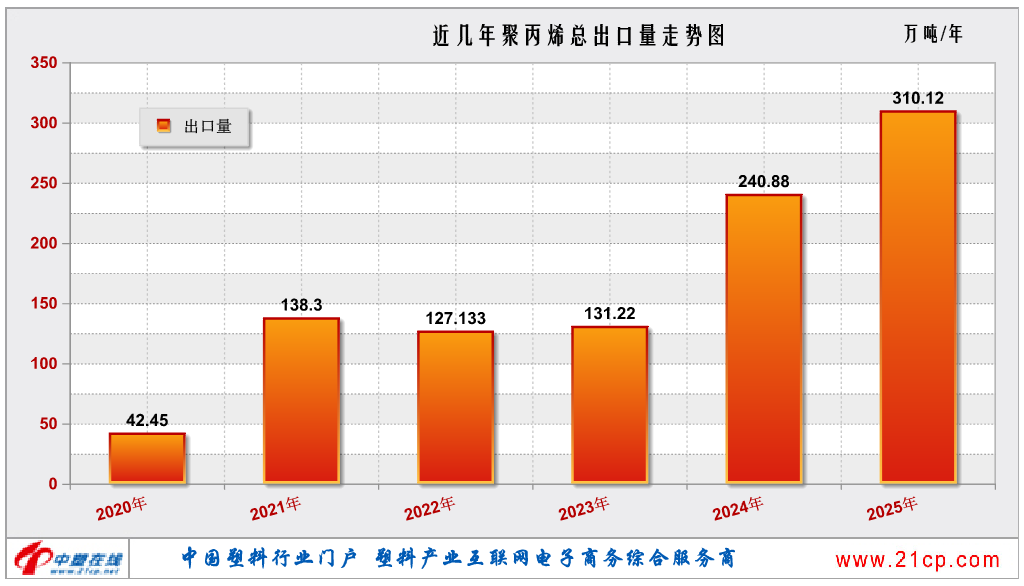
Opening the domestic PP trade ledger of the past five years, a set of strikingly contrasting data leaps into view: import volume was halved from 6.55 million tons in 2020 to 3.37 million tons in 2025, while export volume soared from 420,000 tons to 3.1 million tons, growing more than sixfold. Behind this "one drop, one rise" scissors gap lies a quiet yet profound restructuring of China's PP industry.
Once: Dependent on Imports, at the Mercy of Others
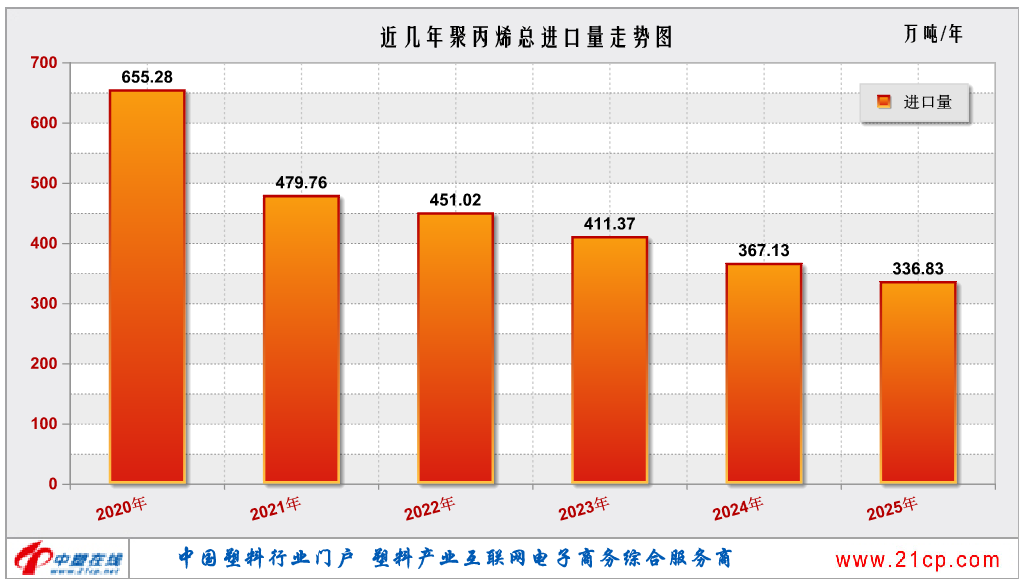
Just five years ago, China still had to purchase over 6.5 million tons of PP from abroad every year, equivalent to more than a dozen 10,000-ton cargo ships carrying plastic raw materials to Chinese ports every day. Why buy so much? Because at that time, the PP we produced ourselves was not only insufficient in quantity but also unavailable in many high-end grades. For example, high-flow PP needed for manufacturing thin-walled food containers, and sterile-grade PP required for medical devices — these special grades were long dependent on imports from South Korea, the Middle East, and Southeast Asia. Back then, as soon as international oil prices rose or overseas plants went into maintenance, domestic downstream enterprises would grow nervous — neither raw material supply nor prices were in their own hands.
Transformation: Able to Produce Ourselves, and Produce Well
The change began with the "technology upgrading wave" at domestic chemical plants. Chinese enterprises mastered the technology of producing PP using diversified raw materials such as coal and propane, breaking the long-standing limitation of dependence on petroleum. Especially in regions rich in coal resources, the cost advantage of coal-to-PP gradually emerged.
Now: Not Only Sufficient, But Also Exportable
With the growth of domestic production capacity and technological progress, the PP market has experienced a "plot reversal":
· Fewer and fewer imports: In 2025, import volume was half of what it was five years ago, and many grades that once had to be imported have now achieved domestic substitution.
· More and more exports: In 2025, export volume was more than seven times that of five years ago, and China's PP has begun to go global.
The regions with the fastest export growth are Southeast Asia and countries along the "Belt and Road." These regions are undergoing an industrialization process similar to China's twenty years ago, with strong demand for plastic raw materials. And China's PP, with its stable quality and competitive prices, has won favor in local markets.
Future: Marching Toward "Specialized and Green"
The current PP industry is undergoing a new round of upgrading:
1. Specialization: Enterprises no longer blindly pursue output volume but instead target "specialized, refined, distinctive, and innovative" grades. For example, special PP used for new energy vehicle battery separators, and low-dielectric-constant PP used for 5G communication equipment — these high-value-added products have become new focal points of competition.
2. Greenization: Recyclability and biodegradability have become industry keywords. Some enterprises have begun developing "mono-material" packaging solutions — using the same PP material for plastic bags and packaging films, making recycling simple and efficient. Other enterprises are developing bio-based PP, using renewable raw materials to replace fossil-based ones.
A Small Material, a Big Era
From massive imports to massive exports, the change in PP trade is a microcosm of China's manufacturing upgrading. It tells us that through technological innovation and industrial upgrading, Chinese manufacturing is fully capable of occupying a more important position in the global industrial chain.
The story of this seemingly ordinary plastic raw material actually reflects the journey of Chinese industry from "following" to "running alongside" and then to "leading" in some fields. And its future will remain closely linked to everyone's life — safer, more eco-friendly, and more functional plastic products are moving from laboratories into our daily lives. Whether it's the meal container you get when ordering takeout or the packaging when shopping online, behind these everyday items lies a Chinese PP industry that is becoming both "stronger" and "greener."
Article Source: CPlas Online - Open Platform Doudou Youmi
Disclaimer: The content and images contained herein are sourced from public channels such as the Internet and WeChat official accounts. We maintain a neutral stance toward the viewpoints expressed in this article, which is for reference and exchange only. The copyright of republished articles belongs to the original authors and institutions. If there is any infringement, please contact us for removal.

More News
- < Previous : [Insights]Sudden Brakes Afte
- None : Next >

- Stock Code
838363

- +86 186 6517 1961
+86 186 6687 8722
-




- Chat
- Top