

Introduction to In-Mold Labeling Technology

In-mold labels have a history of over 20 years in developed countries in Europe and America. In recent years, this new labeling technology has taken root and sprouted in China, and has been applied in industries such as motor oil, daily necessities, food, and pharmaceuticals.
What is an in-mold label? It refers to a special label paper made from PP or PE synthetic paper that has been surface-treated and coated with a special hot-melt adhesive on the back, which is then printed into a trademark. A robotic arm picks up the pre-printed label and places it in the mold, where vacuum micro-holes on the mold firmly adsorb the label inside. When the raw material of the plastic bottle is heated and droops in a tube-like shape, the mold with the label quickly closes, and air is blown into the tube to make it cling tightly to the mold wall. At this point, the temperature inside the entire mold is still relatively high, and the solid adhesive on the label clinging to the bottle body prototype begins to melt and combine with the plastic bottle body inside the mold. Thus, when the mold opens again, the plastic bottle body is molded, and the label and bottle body are fused into one. This allows the exquisitely printed trademark to be firmly embedded in the surface of the plastic product, with the label and plastic bottle on the same surface, giving the feeling that there is no label at all, and the colorful graphics and text appear as if directly printed on the bottle body surface.
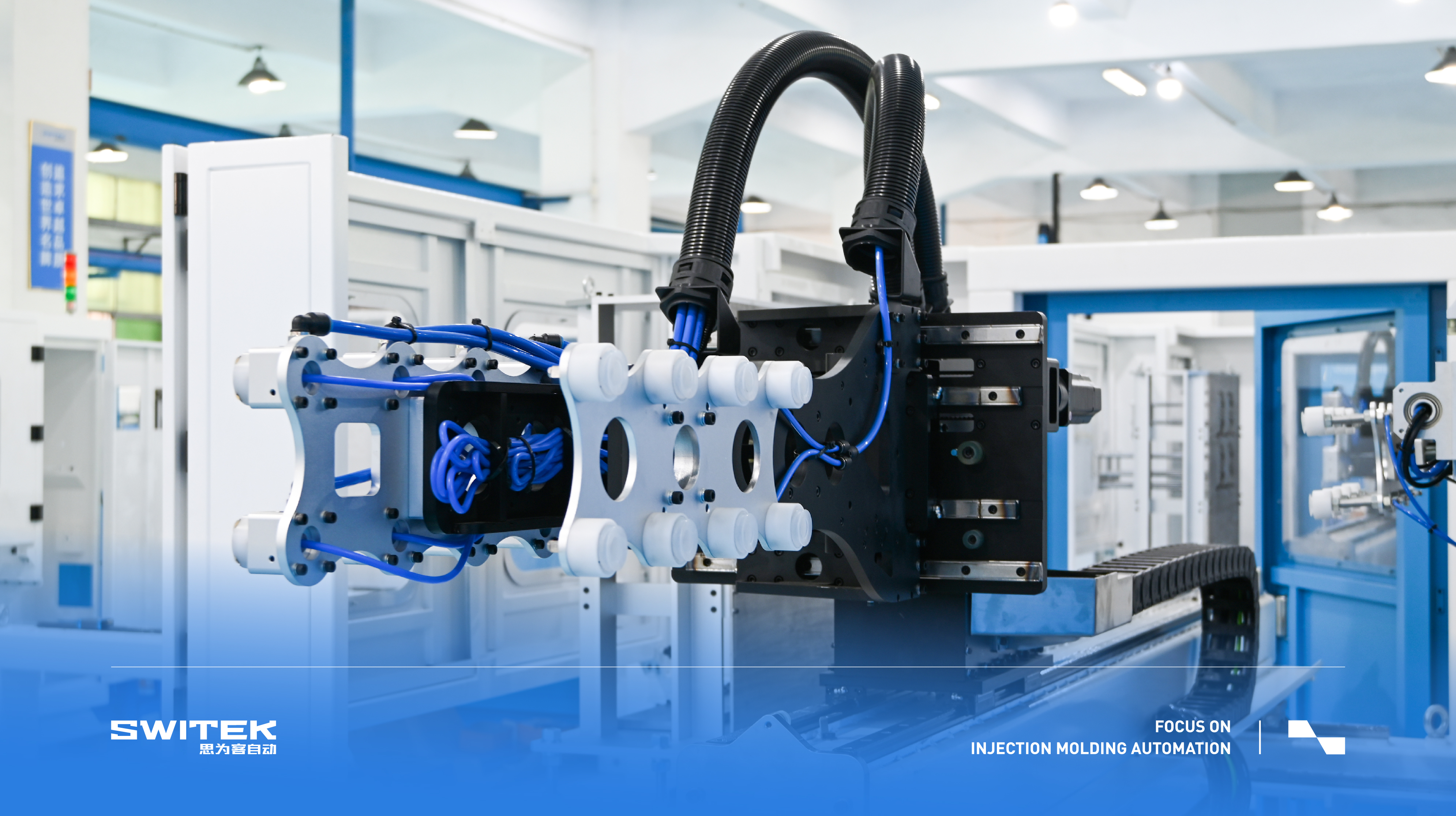
This packaging effect with no "label feel" is gaining favor among consumers. This article will introduce the main technologies involved in in-mold labeling technology.
I. Materials
In-mold labels have a very high technical content, which is first reflected in the materials. The earliest to enter the Chinese market was Japanese YUPO in-mold labels, known as the world's most successful in-mold label material. Now, French Polyart blow-molding in-mold labels have also entered the Chinese market, and some domestic enterprises are also stepping up research and development of this material.
In-mold labels must first have good printability, ensuring that ink firmly adheres to the surface, and must have good processability in post-processing, such as die cutting and cold foil stamping processability. Secondly, this material must meet usage characteristics, combining with the plastic bottle as one body during blow molding.
In-mold label materials are divided into two major categories: paper and plastic film. The former deforms when exposed to water or moisture, reducing its use value, but its advantage is that there is no static interference, reducing label suction loss during bottle blowing. Additionally, it is not the same material as plastic bottles, making it inconvenient for recycling and reuse. Currently, both domestic and international markets generally use plastic film-type in-mold label materials.
The structure of in-mold label materials consists of a printing surface, an intermediate layer, and an adhesive layer. The function of the printing surface is to accept ink and form colorful graphics and text; the intermediate layer supports the printing surface, giving the material sufficient stiffness and transparency, and does not deform under the action of printing machines and high temperatures, ensuring precise registration. The adhesive layer melts under high temperature, allowing the label material and plastic container to become one body, ensuring that the label and plastic bottle are firmly bonded together.
There are generally three types of printing surface materials: PE, BOPP, and PE+PP. Since most plastic containers currently are made of PE, using PE in-mold labels is more conducive to recycling and reuse because they are the same material. When producing in-mold labels, in order to improve the ink affinity of the printing surface material, it is generally necessary to coat a surface coating or use corona discharge methods to increase surface energy.
The adhesive layer surface has two structures: flat non-mesh structure and mesh structure. The former directly contacts the preform during use, naturally exhausting air, and is suitable for small-area labels. The latter has a mesh structure embossed on the surface, and during use, gas is exhausted through the mesh exhaust channels, avoiding the generation of air bubbles. The adhesive layer also has anti-static properties, preventing double sheets during printing; additionally, it has sliding properties, ensuring smooth label separation and enabling smooth printing processing.
II. Printing of In-Mold Labels
Different printing manufacturers can choose different printing processes according to their own equipment conditions. Offset printing, flexographic printing, letterpress printing, and gravure printing can all print in-mold labels, with offset printing and flexographic printing currently being the most common.
1. Offset Printing
The advantages of offset printing in fine halftone dot printing are very prominent, but the line and solid printing effects and printing saturation are not as good as other printing methods. Offset printing cannot achieve inline printing processing like flexographic printing, so after printing, offline die cutting, cold foil stamping, varnishing, and other processes must be performed. However, offset printing is suitable for small-batch label printing, with short cycles and strong flexibility.
2. Gravure Printing
Solid printing and printing color saturation are superior to offset printing, but it is not suitable for printing small halftone dots and richly layered trademarks. However, color difference control is relatively convenient. On a gravure printing machine, the paper path of in-mold label materials is longer than other printing methods, so there is a greater chance of static electricity occurring. Gravure plate-making costs are high and the cycle is long, so it is suitable for long-run in-mold label printing.
3. Letterpress Printing
Letterpress printing is suitable for printing solid and line trademarks, but the effect of printing small halftone dots is not ideal. Color difference control for the same batch of products is also relatively easy, but ink streaks may occur. From a cost perspective, it is cheaper than both gravure and flexographic printing.
4. Flexographic Printing
The outstanding advantage of flexographic printing is that printing and post-processing can be completed in one go: the front end is the feeding end, and the back end obtains the final printed and processed finished product, achieving inline production of printing and post-processing. Now, with the improvement of flexographic plate-making technology, halftone dot printing quality has made great progress, and the use of flexographic printing for in-mold labels has been recognized by some manufacturers. However, printing with environmentally friendly water-based ink is not yet mature, and currently experienced manufacturers use UV ink with good fluidity, which has become a trend in in-mold label printing.
III. Post-Processing of In-Mold Labels
After in-mold label printing, post-processes such as varnishing, foil stamping, and die cutting are also required according to customer requirements.
1. Varnishing
In order to improve the glossiness of in-mold labels and the surface decoration characteristics of products, and simultaneously to improve the abrasion resistance and high-temperature resistance of in-mold labels, printed in-mold labels can be varnished. During labeling, if vacuum adsorption is used for in-mold labels, an appropriate amount of anti-static agent should be added and the slipperiness of the varnish should be adjusted; if electrostatic adsorption is used for in-mold labels, the varnish should not contain anti-static agent; if foil stamping is still needed after in-mold label printing, foil-stampable UV varnish should be selected; if additives have been added to the varnish, testing should be conducted before varnishing to avoid scrapping the entire batch of products.
2. Foil Stamping
For foil stamping on in-mold label materials, different foil stamping processes can be used: foil stamping first then varnishing, or varnishing first then foil stamping. Foil stamping can use two technologies: cold foil stamping and hot foil stamping. Cold foil stamping is mainly used in flexographic printing. To achieve better visual effects with cold foil stamping requires higher process technology. We generally recommend the process of cold foil stamping first then printing, which can use a thicker ink layer to cover the edge burrs of cold foil stamping. If customers can accept the visual effect of cold foil stamping, we recommend adopting this technology.
For hot foil stamping of in-mold labels, influencing factors include anodized aluminum foil, stamping temperature, stamping pressure, and stamping speed. During hot stamping, stamping foil with a hot-melt adhesive melting point lower than that of the in-mold label material should be selected, and stamping pressure and time should be strictly controlled to avoid concave-convex deformation of the in-mold label material. During hot stamping, first, based on the material characteristics of the in-mold label and the stamping suitability of the anodized aluminum foil, adjust the size of the stamping plate and stamping speed to determine the stamping temperature and pressure, adjusting the pressure first and then determining the stamping temperature. Overall, foil stamping can increase the added value of in-mold labels.
3. Die Cutting
The die cutting of in-mold labels is extremely similar to the die cutting method of playing cards, which is through-cut die cutting. Since die cutting is the final processing step of in-mold labels, static elimination during die cutting is very important, because unsatisfactory static elimination can lead to irregular stacking, which in turn causes inaccurate labeling positions and double-sheet problems.
The die cutting of in-mold labels is divided into two methods: sheet-fed die cutting and web-fed die cutting. The specific method to be adopted depends on the manufacturer's equipment and the type of in-mold label material. Among these two die cutting methods, web-fed die cutting is further divided into inline die cutting and offline die cutting.
Web-fed flatbed die cutting is suitable for web in-mold label materials. This is an offline die cutting method with very high die cutting precision. It has two paper feeding methods: one is intermittent paper feeding, where the die cutting device only moves up and down; the other is continuous paper feeding, where the die cutting device not only moves up and down but also swings back and forth. After die cutting in both working methods, the labels are sent to the stacking station via a conveyor belt.
Web-fed rotary die cutting is suitable for web in-mold labels, and there are two die cutting methods: inline die cutting and offline die cutting. Rotary die cutting is currently the most perfect die cutting method, with very high die cutting precision, but the cost of making die cutting rollers is relatively high, making it suitable for long-run in-mold label processing of over 100,000 sets. This die cutting method is used in flexographic printing inline processing production, with high efficiency, and is relatively popular in the United States.
Sheet-fed flatbed die cutting is suitable for sheet-fed die cutting label materials. This is an offline die cutting method with average processing precision. Paper is fed by an automatic paper feeder, waste is automatically discharged after die cutting, and finished labels are placed on the stacking station by a robotic arm.
IV. In-Mold Labeling Methods
After die cutting into labels, a robotic arm picks them up one by one and places them into the mold cavity. Using the temperature of the extruded plastic and the pressure of the inhaled air, the label and plastic bottle are fused into one body. Currently, there are two methods of in-mold labeling: vacuum negative pressure suction method and electrostatic suction method.
The vacuum suction method is currently the most common and widely used method. Plastic packaging product companies can add vacuum micro-holes to existing molds without requiring dedicated equipment. It is low-cost, very effective, and vacuum marks are not easily noticeable. This technology is currently very mature.
The electrostatic suction method achieves in-mold label adsorption. The biggest advantage of this technology is that there is no need to modify existing blow molding equipment, but currently there are no truly successful cases of it being put into use in China. The electrostatic suction method has special requirements for in-mold labeling technology equipment and the physical properties of labels:
1) A high-voltage electrostatic discharge system must be added to the equipment to uniformly apply sufficient electrostatic charge to the label in a short time, and the label is applied to the inner cavity of the blow mold at zero potential through a robotic arm.
2) A static elimination system must be added to the equipment to eliminate residual static electricity after each labeling, avoiding its impact on the electrical control system of the in-mold labeling machine and label adhesion caused by static electricity.
3) Appropriate label substrates and appropriate printing inks must be selected.
V. Advantages of In-Mold Labels
1. Beautiful Appearance
In-mold labels are molded together with plastic containers, and no label edges or corners can be seen on the plastic bottle body, making the appearance look very beautiful. Secondly, due to the good printing effect of in-mold labels, they are suitable for printing originals with rich details and delicate images, so their visual expressiveness is very strong. Since in-mold labels have no edges or corners, they do not experience "label lifting" and "label falling off" phenomena like self-adhesive labels. In humid environments, in-mold labels do not bulge or become moldy.
2. Anti-Counterfeiting
Currently in China, only a few companies provide in-mold labeling services, because the one-time equipment investment is large. There are many variable factors in mold design, label printing and processing, and labeling molding processes, so in-mold labels have technical barriers, and forging or counterfeiting trademarks is not an easy task. The currently very popular self-adhesive labels, due to their very mature technology, are easy to counterfeit with low counterfeiting costs, so counterfeit and shoddy products are rampant, damaging the interests of manufacturers. Adopting in-mold labels gives manufacturers peace of mind regarding anti-counterfeiting, and they can finally breathe a sigh of relief.
3. Recycling and Reuse
In-mold label materials and plastic bottles are the same material. After consumers use the product, the plastic bottles can be crushed and recycled together, with high recycling efficiency and low cost, making them green and environmentally friendly packaging materials. For self-adhesive labels, recycling is more troublesome: the self-adhesive label needs to be torn off, the adhesive on the bottle removed, and then recycled, with low efficiency and relatively high recycling costs. Therefore, in-mold labels align with the development trend of green packaging.
VI. Applications of In-Mold Labels
From the development situation at home and abroad, in-mold labels are mainly applied in the following industries:
1. Motor oil industry: including plastic container packaging for products such as lubricating oil, gear oil, and antifreeze.
2. Daily chemical products industry: product packaging for body wash, shampoo, cleaners, detergents, and personal care products.
3. Food industry: product packaging for soy sauce, ice cream, coffee, juice, tea beverages, yogurt, etc.
4. Pharmaceutical industry: high-end pharmaceutical packaging
Although in-mold labels have not been around for a long time, they are attracting the attention of more and more manufacturers. In Europe and America, the development of in-mold labels has begun to enter a stable development track; in China, in-mold labels are developing rapidly at a rate of 70%. Looking to the future, in-mold labels will pose a strong challenge to self-adhesive labels, and will eliminate paper in-mold labels, fully developing toward plastic material labels. Moreover, there will be more and more end customers using in-mold labels.

- < Previous : None
- [Tech]IML Process: Elect : Next >

- Stock Code
838363

- +86 186 6517 1961
+86 186 6687 8722
-




- Chat
- Top