

IML and IMD: Still Confusing the Two?

For those who work in injection molding year-round, in-mold labeling injection molding (IML) and in-mold decoration injection molding (IMD) are processes frequently encountered in production. However, the two differ significantly in technical details, application scenarios, molds, and raw materials. A moment of carelessness can lead to product defects, mold wear, and high costs.
This article expands on eight key elements, packed with hardcore technical knowledge throughout, to help you fully grasp the core differences between the two processes.
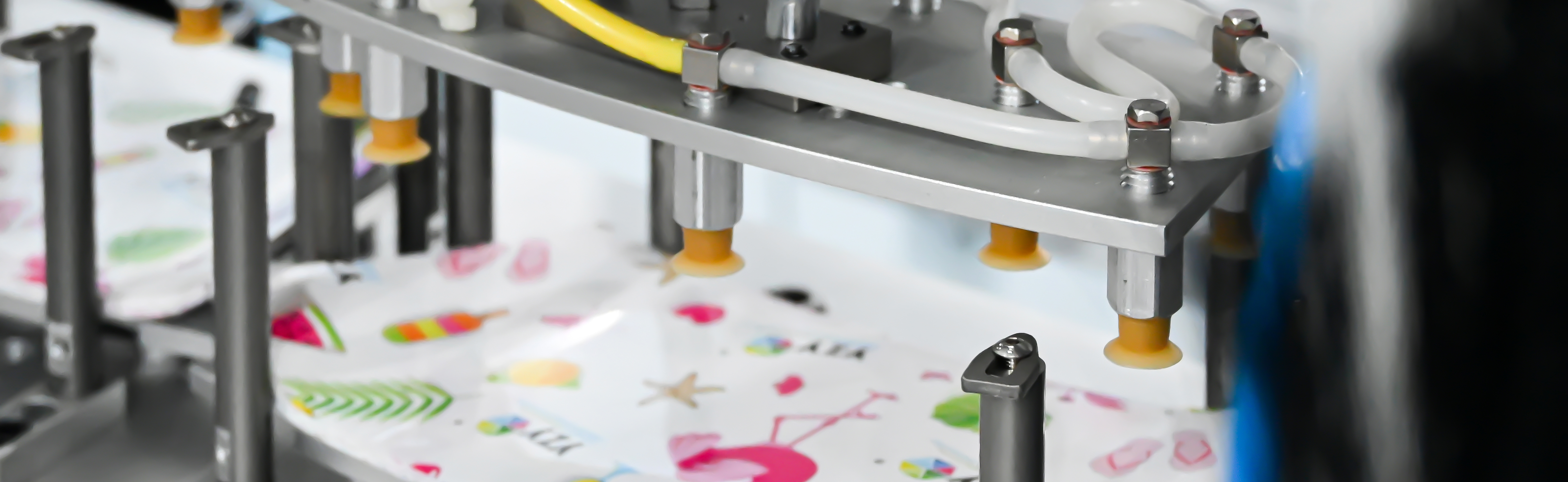
I. Differences in Process
In-Mold Labeling (IML)
Pre-printed and pre-formed film sheets are placed into the mold cavity. During the injection molding process, the film is tightly fused with the molten plastic. The film permanently remains on the surface of the plastic part without peeling off, and the ink layer is sandwiched between the film and the plastic, forming an integrated decorative layer.
In-Mold Decoration Injection Molding (IMD)
Uses roll-form transfer film, which is fed into the mold parting surface through dedicated equipment (a film feeder). During injection molding, only the ink and decorative layer are transferred to the surface of the plastic part. After molding, the carrier film is automatically peeled off and does not remain on the product. This is a roll-to-roll continuous transfer process (like an old-fashioned film projector).
II. In-Depth Analysis of Eight Key Elements
Element 1: Product Structural Design
IMLStructural Requirements
Suitable for deep-cavity, complex 3D curved surfaces, products with stepped edges and corners, and large-area coverage. There is no strict limit on drawing depth, and complex shapes need to be achieved through film pre-forming. The draft angle is generally no less than 2° to avoid scratching the film layer and printed patterns during demolding. The parting surface should avoid the film edges to prevent film crushing or pinching during mold closing, which would affect product appearance and molding stability.
IMDStructural Requirements
Only suitable for flat and shallow, gently curved products. Cannot be used for deep-cavity, sharp-cornered, or large-draw-ratio products. The mold parting surface must be smooth and flat with no sharp edges or corners, to prevent the roll film from being scratched or torn during feeding and mold closing, ensuring smooth continuous production.
Element 2: Raw Material Selection
IMLRaw Material System
- Film material: Mainly PC, PET, PMMA, and composite films are selected. The film sheet has a hard coating to protect the surface from scratches;
- Ink: Special high-temperature-resistant injection molding ink is used, which must be pre-matched with the film material and plastic substrate to ensure adhesion;
- Plastic substrate: ABS, PC/ABS, PP, etc. are commonly used. They must have good compatibility with the film material to prevent delamination, film peeling, and blistering after molding.
IMDRaw Material System
- Film material: Special multi-layer structured roll-form transfer film, including a hard coating layer, ink layer, adhesive layer, and carrier release layer, formed integrally;
- Ink: Special high-temperature transfer ink is used, which can completely detach from the carrier film under the high-temperature and high-pressure environment of injection molding and firmly adhere to the surface of the plastic part;
- Plastic substrate: Mainly PC, ABS, PC/ABS. Must match the adhesive system of the transfer film to ensure complete transfer without missing ink or ink shedding.
Element 3: Mold Design
IMLMold Design Key Points
1. Equipped with precise film positioning structure to prevent film displacement and偏移 during production;
2. Must have a vacuum suction device to allow the film to tightly adhere to the inner wall of the mold cavity, avoiding wrinkling and bulging;
3. Gate location and injection method should be reasonably designed to avoid molten plastic splashing the film and washing away the ink, which would cause pattern damage;
4. The parting surface must be treated to avoid the film, and must not squeeze or damage the film edges during mold closing;
5. Consider changes in plastic part dimensions and shrinkage rates caused by film thickness. Multi-cavity molds must ensure consistent film positioning across all cavities. For multi-cavity molds, the film thickness itself changes the plastic part dimensions and shrinkage rates. If you want products from each cavity to have uniform dimensions, the film positioning in all cavities must be completely consistent. The film positioning in each cavity must be highly consistent — any positioning deviation will lead to uneven shrinkage between cavities and product dimension deviations.
IMDMold Design Key Points
1. Standard equipped with roll film clamping, guiding, and tensioning mechanisms,配合 with automatic film feeding equipment to achieve precise step-by-step feeding of the roll film;
2. Excellent sealing performance of the parting surface to prevent material leakage during injection molding while avoiding pinching and breaking the roll film;
3. Built-in vacuum suction structure to ensure the roll film completely adheres to the mold cavity, guaranteeing complete and undeformed transfer patterns;
4. Designed with a parting surface cleaning structure to promptly clean residual ink debris, avoiding impact on product appearance;
5. The mold cavity must not have sharp edges or corners, protecting the roll film throughout the process to prevent film body damage during feeding and mold closing.
Element 4: Injection Molding Process Parameters
IMLInjection Molding Process
1. Process flow: Film placed into cavity → Mold closing → Injection molding → Cooling → Mold opening and part removal;
2. Injection temperature and injection speed should be moderate to slightly slow, avoiding high-speed and high-pressure that could displace the film or damage the ink;
3. Holding pressure and holding time should be stable to prevent plastic part warping, film layer wrinkling, and poor bonding between the film and plastic part;
4. Cooling must be sufficient to eliminate internal stress and ensure product dimensional accuracy and intact appearance.
IMDInjection Molding Process
1. Process flow: Automatic roll film feeding → Vacuum suction positioning → Mold closing → Injection transfer → Mold opening → Carrier film peeling;
2. Injection parameters must match the characteristics of the transfer film, with temperature and pressure meeting standards to ensure complete ink transfer;
3. Injection speed must be precisely controlled — too fast and patterns tend to blur; too slow and cold material marks tend to appear;
4. Mold opening and peeling actions must be synchronized to ensure smooth detachment of the carrier film without sticking to the plastic part or tearing the decorative layer;
5. The molding cycle must remain stable, with strict control over the film movement step distance to ensure precise and consistent pattern positions for every shot and every cavity.
Element 5: Production Control
IMLProduction Control — Special Attention Required
The IML production process is divided into four stages: film printing, film hot-press forming, film cutting, and in-mold injection molding. It uses single-piece film production, which can be manually loaded or automatically loaded by a robotic arm. It is adaptable to many varieties and suitable for small-to-medium batch production. Core control points: Film positioning must be precise, no wrinkling allowed, no ink washing allowed, and the衔接 between each process must be smooth to reduce defects and waste.
IMDProduction Control
The entire process uses a roll-to-roll automated production method. Its processes are divided into: roll film printing, fully automatic injection molding, and automatic carrier film peeling. No manual part placement is required, resulting in high production efficiency, especially suitable for large-batch production of a single product. Core control points: Roll film feeding must be stable, pattern transfer must be complete, peeling from the carrier film must be clean, equipment operation must be stable, and downtime for debugging must be reduced.
Element 6: Cost Structure Analysis
IMLCost Characteristics
The cost of converting ordinary injection molding to IML is moderate. No dedicated配套 automatic film feeder (Feida machine) is required, and production can start with small batches with controllable costs. Film production costs will gradually decrease as production batch size increases. There are relatively many processes, and the yield depends on standardized operation and process control levels.
IMDCost Characteristics
Upfront investment costs are relatively high, including dedicated molds and automatic film feeding equipment (Feida machine), resulting in low cost-effectiveness for small-batch production. For large-batch production, due to high automation and low labor costs, the per-unit product cost advantage is very significant, production stability is particularly good, and long-term large-scale production is more economical.
Element 7: Performance Testing
Both processes require the following tests to control product quality:
1. Adhesion test: Using the cross-cut test method and peel strength test to test the bonding force between the film/ink and the plastic part;
2. Environmental reliability test: Including high-low temperature cycle test, damp heat resistance test, and UV aging resistance test;
3. Chemical resistance test: Alcohol resistance, detergent resistance, grease corrosion resistance, with no product defects such as peeling, discoloration, or loss of gloss;
4. Physical abrasion resistance test: RCA abrasion test (RCA paper tape abrasion test) and steel wool abrasion test to verify the abrasion resistance of the product surface;
5. Hardness test: Pencil hardness test to verify the scratch resistance of the surface coating.
Performance differences: IML ink is enclosed by the film layer, so its weather resistance and durability are relatively better; IMD ink is exposed on the product surface, so its scratch resistance depends on the quality of the coating, and durability must be ensured through the coating.
Element 8: Appearance Effects and Functions
IMLEffects and Functions
IML can achieve various appearance and tactile effects such as wood grain, leather grain, metal brushing, matte finish, and skin-friendly touch. It also supports backlighting and hidden icon design. The film layer provides excellent protection, resulting in a longer product service life.
IMDEffects and Functions
IMD has high printing precision with delicate and refined patterns, suitable for high-demand flat decoration. It can achieve mirror surfaces, gradients, touch panels, and integrated sensing functions, balancing decorativeness and functionality with outstanding visual quality.
III. Core Principles for Process Selection
- For plastic parts that are deep-cavity, complex 3D curved surfaces,追求 long-life durability, and have flexible production batches, choose the IML in-mold labeling process;
- For plastic parts that are flat, shallow curved surfaces, large-batch standardized production, and追求 high appearance precision and automation efficiency, choose the IMD in-mold decoration process.
Both processes have specific requirements in product structure adaptation, mold design, raw material selection, and parameter settings, and cannot be arbitrarily interchanged. Only through precise matching of the above elements (product structure, mold design, raw materials, parameters) can product yield be improved, manufacturing costs reduced, and product quality guaranteed.
Article Source: Injection Molding Science
Disclaimer: The content and images contained herein are sourced from public channels such as the Internet and WeChat official accounts. We maintain a neutral stance toward the viewpoints expressed in this article, which is for reference and exchange only. The copyright of republished articles belongs to the original authors and institutions. If there is any infringement, please contact us for removal.

More News
- < Previous : [Views]Global Turmoil Ami
- [Views]20 Years of Focus : Next >

- Stock Code
838363

- +86 186 6517 1961
+86 186 6687 8722
-




- Chat
- Top