
Fuerte impulso de la política del «15.º Plan Quinquenal»: CHINAPLAS 2026 Salón Internacional del Plástico y el Caucho estrena nueva imagen

En el año de inauguración del «15.º Plan Quinquenal», un nuevo y dinámico panorama de desarrollo innovador para la industria del plástico y el caucho está a punto de desplegarse en el «CHINAPLAS 2026 Salón Internacional del Plástico y el Caucho». Las propuestas del 15.º Plan Quinquenal apuntan a fomentar y ampliar las industrias emergentes y futuras, profundizar la apertura de alto nivel y seguir las directrices de desarrollo inteligente, sostenible e integrado. Esto no solo abre amplias perspectivas para el desarrollo de alta calidad de la industria del plástico y el caucho, sino que también define focos precisos para la feria.
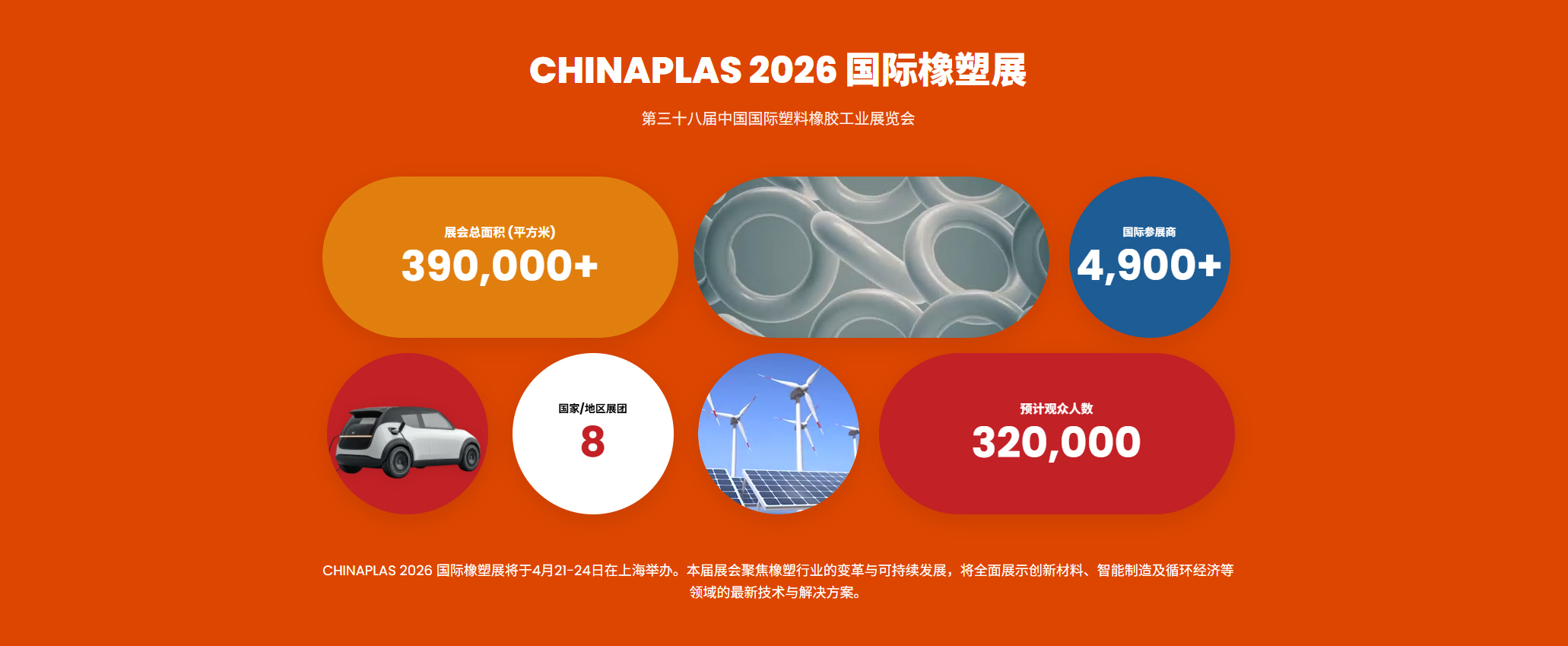
Como importante plataforma comercial y de intercambio tecnológico que muestra los logros de las nuevas fuerzas productivas de la industria plástica‑cauchera, conecta la oferta y la demanda y fomenta la colaboración industrial, el «CHINAPLAS 2026 Salón Internacional del Plástico y el Caucho» contará con una escala ultraamplia de más de 390 000 metros cuadrados. Actuará como un «laboratorio real» para la implementación de políticas y una ventana clave para observar las tendencias sectoriales y las direcciones tecnológicas. Bajo el lema «Transformación · Colaboración · Construyendo juntos la sostenibilidad», la feria se celebrará del 21 al 24 de abril de 2026 en el Centro Nacional de Exposiciones y Convenciones (Hongqiao) de Shanghái, ayudando al sector a aprovechar las nuevas oportunidades generadas por las transformaciones de la época.
Auge de las industrias emergentes: la industria del plástico y el caucho explora nuevos océanos azules de crecimiento
Las propuestas del 15.º Plan Quinquenal plantean explícitamente fomentar y ampliar las industrias emergentes y futuras, impulsar el desarrollo de conglomerados industriales estratégicos emergentes como las nuevas energías, nuevos materiales, industria aeroespacial y economía de baja altitud, y promover la tecnología cuántica, biofabricación, energía de hidrógeno, fusión nuclear, interfaces cerebro‑computadora, inteligencia encarnada y comunicaciones móviles de sexta generación como nuevos motores de crecimiento económico. El auge de estos sectores amplía constantemente los límites de aplicación de los materiales plásticos y de caucho, al mismo tiempo que abre nuevos espacios de crecimiento para esta industria fundamental de la manufactura.
En 2025, la producción y las ventas de vehículos de nueva energía de China alcanzaron respectivamente 16,626 millones y 16,49 millones de unidades, con crecimientos interanuales del 29 % y el 28,2 %, manteniéndose en el primer puesto mundial durante once años consecutivos. Siguen surgiendo soluciones de materiales de nueva generación orientadas a baterías, postes de carga y sistemas de accionamiento eléctrico. Tecnologías como los antioxidantes poliméricos de Rianlon prolongan eficazmente la vida útil de los sistemas de batería y equipos de carga en entornos extremos. El material plástico de ingeniería de alta pureza TECHNYL® PURE de DOMO, con excelentes propiedades de aislamiento eléctrico y resistencia a la corrosión química, es apto para entornos eléctricos de alta tensión.
Hacia el cielo: comienza una trayectoria de billones de yuanes. En 2026, la economía de baja altitud entra en una fase de explosión triple en materia de políticas, tecnología y demanda. Desde la logística de baja altitud y turismo cultural hasta el rescate de emergencia y atención ante desastres, el efecto de integración «baja altitud +» es muy destacado. Los plásticos y materiales compuestos se han convertido en uno de los materiales estratégicos de valor para aeronaves de baja altitud. El policarbonato de alto CTI de Covestro brinda rendimiento y seguridad fiables en entornos eléctricos adversos, garantizando el funcionamiento estable de aeronaves eVTOL (despegue y aterrizaje vertical eléctrico). El panel compuesto ignífugo KingPan® de Kingfa, con alto contenido de fibra de vidrio y grado de ignífugo V‑0, resiste fuegos de 1200 °C durante 30 minutos de combustión continua, presenta las fuertes ventajas de no goteo y autoextinción en 10 segundos tras retirarlo del fuego, por lo que es apto para componentes de aeronaves de baja altitud.
El crecimiento explosivo de la industria aeroespacial comercial genera una enorme demanda de materiales y equipos. Hasta diciembre de 2025, China ha presentado ante la UIT (Unión Internacional de Telecomunicaciones) solicitudes para desplegar constelaciones de satélites a gran escala que suman más de 200 000 satélites, lo que marca que la construcción de internet por satélites de órbita baja de China ha entrado en una fase de aceleración sustantiva. Los compuestos de nailon reforzados con fibra de carbono, «ligeros pero de alta resistencia», se han convertido en una opción innovadora para soportes de satélites; PEEK y PEKK, con excelente resistencia a altas temperaturas, radiación y corrosión química, pueden usarse en componentes estructurales de satélites, capas aislantes de cables y sellados de motores; la resina fenólica, por su alto rendimiento de carbonización y buena procesabilidad, se emplea en boquillas de cohetes sólidos comerciales; el LCP, con baja constante dieléctrica, bajas pérdidas dieléctricas y gran resistencia térmica, forma parte de los materiales clave para componentes de comunicación de alta frecuencia de satélites. Los materiales compuestos ligeros de Shisuoke pueden sustituir metales estructurales aeronáuticos; sus preimpregnados y el sistema de resina epoxi MTM46 están desarrollados especialmente para entornos extremos, con rigidez, resistencia al impacto y prestaciones térmicas superiores a los metales. La fabricación de carenados de carga útil con este material reduce el peso en aproximadamente un 30 % respecto a los metales, disminuye notablemente el consumo de combustible de lanzamiento, aumenta la capacidad de carga útil y reduce los costes de fabricación.
El año 2025 es el año de inicio de la producción masiva de robots humanoides, y 2026 marcará un punto de inflexión crucial para su escalado de volumen y aceleración de la comercialización. Los robots humanoides evolucionan rápidamente de «actuar en escenarios» y «competir en pruebas» a «usarse en hogares» y «trabajar en fábricas». IDC prevé que el gasto de los usuarios en robots de inteligencia encarnada en China superará los 1400 millones de dólares en 2025, con una tasa de crecimiento anual compuesto del 94 % en los próximos cinco años. En este océano azul, los avances en tecnología de materiales son el soporte fundamental para el despliegue a escala de robots, y los materiales plásticos y de caucho son insumos indispensables. Los plásticos de ingeniería especiales como PEEK y PPS, gracias a su alta resistencia, baja densidad, resistencia al desgaste y autolubricación, presentan una tendencia cada vez más marcada de sustituir materiales metálicos en articulaciones, engranajes, rodamientos y otros componentes de robots. El TPE es apto para elementos flexibles como músculos artificiales y piel artificial. Lushan New Materials ha lanzado una nueva generación de productos de piel electrónica sin iones de doble modalidad temperatura‑presión, capaces de captar con precisión sensaciones de fuerza minúsculas como el tacto ligero y el pulso. El TPE para músculos artificiales ultra‑blando de Dawn Group, con dureza Shore de hasta 0A, ofrece ultra‑suavidad, excelente elasticidad y una superficie seca sin grasitud, y se puede utilizar en componentes clave como accionamientos de articulaciones de robots.
El «CHINAPLAS 2026 Salón Internacional del Plástico y el Caucho» reúne a más de 4600 expositores globales de alta calidad, responde activamente a la demanda del mercado, presenta de forma centralizada tecnologías más punteras, escenarios de aplicación más ricos y mayor vitalidad industrial, y conecta eficazmente con la modernización de industrias tradicionales, expansión de sectores emergentes y planificación de industrias futuras.
Actualización inteligente y transformación sostenible: el plan estratégico se convierte en realidad industrial
Las propuestas del 15.º Plan Quinquenal plantean «implementar plenamente la acción «IA+»» y «alcanzar las posiciones de vanguardia en las aplicaciones industriales de la inteligencia artificial, impulsando todas las industrias de forma multidimensional». A principios de 2026 se han aprobado sucesivamente múltiples medidas políticas, y diversas regiones aceleran la innovación integrada de «IA + Manufactura». Desde la actualización colaborativa de cadenas industriales hasta el impulso preciso para pequeñas y medianas empresas, la tecnología de inteligencia artificial se integra plenamente en todos los eslabones de la manufactura.
Frente a los problemas de baja eficiencia y baja tolerancia a fallos de la inspección de calidad manual tradicional, la IA no solo captura con precisión defectos a nivel de micras, sino que también aprende e itera continuamente los criterios de inspección, sin dejar pasar ninguna imperfección. El sistema de inspección de alta velocidad de Good‑View, que se presentará en el «CHINAPLAS 2026 Salón Internacional del Plástico y el Caucho», se basa en tecnología de visión avanzada que combina algoritmos tradicionales y de IA, destinado al monitoreo de calidad en tiempo real y reconocimiento de defectos en líneas de producción de alta velocidad, capaz de realizar evaluaciones completas de calidad de producto en milisegundos. El sistema de inspección visual por IA para bolsas de válvula de Xiamen Jina Intelligent emplea tecnología de visión artificial para detectar y rechazar defectos durante la producción de bolsas de válvula, capturando en tiempo real diversos fallos en el avance de bobinas y procesos de fabricación de bolsas, reduciendo costes laborales y la intensidad del trabajo, y mejorando la estabilidad de la calidad de los productos. La tecnología de IA penetra más en la etapa previa de producción, dándole «cerebro» a las máquinas y haciendo que los «grandes modelos» trabajen en las fábricas. ENGEL ha lanzado inject AI; su sistema iQ process observer basado en IA analiza automáticamente más de 1000 parámetros en tiempo real, identifica con precisión las desviaciones de producción y brinda sugerencias de optimización concretas.
Las propuestas del 15.º Plan Quinquenal indican explícitamente «acelerar la transición sostenible integral del desarrollo económico y social». Como componente importante de la manufactura, la industria del plástico y el caucho impulsa el desarrollo circular sostenible mediante la innovación tecnológica, construyendo un ecosistema circular infinito de «producción – uso – reciclaje – regeneración», convirtiendo los «residuos» en un «nuevo punto de partida» para la economía circular. BASF, en colaboración con Porsche y Bester, completó el primer piloto mundial de reciclaje de residuos mixtos de vehículos al final de su vida útil, utilizando por primera vez tecnología de gasificación para procesar residuos complejos procedentes del desguace de vehículos (incluyendo plásticos, láminas, pinturas y espumas, que anteriormente se trataban mayoritariamente por recuperación térmica). Las materias primas recuperadas mediante el método de balance de masas (gas de síntesis y sus derivados) sustituyeron materias primas fósiles en la cadena de valor integrada de BASF, produciendo la formulación de poliuretano necesaria para volantes de automoción y logrando el ciclo cerrado completo «piezas de vehículo desechadas → materias primas → nuevas piezas de vehículo». Purui ha diseñado tres «soluciones de renacimiento» para distintos residuos plásticos: glicólisis, alcoholisis por microondas y métodos de disolvente, orientadas respectivamente a PET, PP, PE y plásticos compuestos y teñidos, estableciendo un sistema completo y eficiente de reciclaje químico para transformar plásticos residuales en materias primas recicladas de alta calidad.
Los plásticos reciclados, materiales de base biológica, plásticos biodegradables, tecnologías de reciclaje, tecnología digital y equipos de producción de alta eficiencia y ahorro energético serán los puntos destacados de la feria. El «CHINAPLAS 2026 Salón Internacional del Plástico y el Caucho» hará realidad el futuro inteligente y sostenible descrito en el 15.º Plan Quinquenal mediante demostraciones en vivo.
Ampliación de la apertura de alto nivel: se pone de manifiesto el valor de salón de recepción global de la industria del plástico y el caucho
El año 2026 es el año de inauguración del «15.º Plan Quinquenal» y un ejercicio decisivo para que China siga demostrando resiliencia y vitalidad en un entorno económico internacional complejo. Las propuestas del 15.º Plan Quinquenal establecen directrices para «ampliar la apertura de alto nivel», proponiendo «ampliar el espacio para la cooperación de inversión bidireccional» y «guiar la disposición transfronteriza racional y ordenada de las cadenas industriales y de suministro». Actualmente, las empresas chinas han pasado de la etapa de «salida de productos» a la de «salida de cadenas industriales» y «salida de ecosistemas». BYD construye una fábrica en Hungría; SAIC Motor se ha asociado con una empresa local turca para poner en marcha una planta de fabricación; la tercera fábrica europea de baterías de CATL se instala en España; Kingfa ha alcanzado la producción a gran escala en Vietnam y España y avanza activamente en la construcción de bases en el extranjero en Polonia, México, Sudáfrica y otros lugares; Yizumi ha fundado filiales en doce países y regiones, entre ellos Alemania, Estados Unidos, India, Turquía y México. Hasta finales de 2025, China había creado más de 50 000 empresas en el extranjero, distribuidas en 190 países y regiones.
Mientras las empresas chinas aceleran su «salida al exterior» para explorar mercados incrementales internacionales, las empresas de capital extranjero siguen aumentando sus inversiones en el mercado chino. En 2025, la inversión extranjera real utilizada en China alcanzó los 747 690 millones de yuanes, con 70 392 nuevas empresas de capital extranjero constituidas, lo que supone un aumento interanual del 19,1 %. El grupo francés FORVIA aumentó su capital y amplió su producción en Changshu, Jiangsu; el complejo de etileno de la base integrada de Zhanjiang de BASF, con una capacidad anual de un millón de toneladas, entró en funcionamiento; y se inauguró la nueva base de producción de poliuretano termoplástico de Covestro en Zhuhai.
Bajo el modelo bidireccional de «salir al exterior» y «atraer inversiones», el valor de nodo de las plataformas comerciales internacionales cobra cada vez más relevancia. Como soporte fundamental para el intercambio tecnológico presencial y la negociación comercial, las ferias pueden eliminar eficazmente barreras de información, generar consensos sectoriales y reforzar la innovación colaborativa. El puente de comunicación construido por el «CHINAPLAS Salón Internacional del Plástico y el Caucho» no solo ofrece canales físicos para que las empresas chinas se conecten con mercados extranjeros y se adapten a las necesidades regionales, sino que también abre una ventana para que las empresas internacionales conozcan la fortaleza manufacturera y la capacidad innovadora de China. Tras años de trayectoria, la feria cuenta con un gran atractivo para expositores y compradores de todo el mundo, convirtiéndose en un salón de recepción global para la industria del plástico y el caucho, que atrae constantemente participantes de todos los continentes.
Actualmente, el comercio mundial sigue enfrentándose a incertidumbres. La industria china del plástico y el caucho construye ventajas competitivas mediante la «innovación de alta calidad». Los compradores extranjeros no solo buscan productos con buena relación calidad‑precio, sino que también adquieren activamente tecnologías punteras como equipos inteligentes y materiales sostenibles de China, aprovechando la sólida capacidad manufacturera e innovadora del país para obtener ventajas de primer movimiento en el mercado global. Esta edición de la feria se convertirá en una ventana fundamental para que la industria mundial del plástico y el caucho «se conecte con la innovación china».
Fuente del artículo: Internet
Descargo de responsabilidad: El contenido y las imágenes aquí publicados provienen de canales públicos como Internet y cuentas oficiales de WeChat. Mantenemos una postura neutral ante las opiniones expresadas en este artículo, que se publica únicamente para fines de referencia e intercambio. Los derechos de autor de los artículos republicados pertenecen a sus autores e instituciones originales. En caso de infracción de derechos, contáctenos para su eliminación.

Más Noticias
- < Anterior : [Información]Anuncio de los resultados de la sele
- [Información]El mercado de máquinas de moldeo por : Siguiente >

- Código Bursátil
838363

- +86 186 6517 1961
+86 186 6687 8722
-




838363
- Chat
- Arriba